Enneagram Type 6: The Complete Guide to the Loyalist Personality

Enneagram Type 6 personalities are like the vigilant sentinels of our social circles—always on the lookout for what might go wrong and ready to lend a steady hand. Their unwavering loyalty and knack for spotting risks make them the go-to person when you need someone to watch your back.
Exploring The Loyalist Archetype
Picture a friend who drafts a detailed packing list for a weekend getaway and tosses extra batteries into their bag “just in case.” That’s Type Six energy in action—protective, thorough, and quietly reassuring.
Vigilant Mindset
Think of a guard dog lounging in the sun, but instantly alert at the faintest rustle. Sixes live in that state of calm readiness, scanning every corner for signs of trouble and opportunity alike.
Sixes ask themselves daily, “Can I trust this situation?” before taking action.
Core Traits In Daily Life
Sixes bring these strengths to everything they do:
• Alertness: • They catch glitches before anyone else spots them.
• Preparedness: • You’ll find them packing first-aid kits for a simple errand.
• Dependability: • Colleagues lean on them for rock-solid follow-through.
• Loyalty: • Once they’ve got your back, they don’t let go.
Statistics show 9–16% of people identify as Type Six. In a study of over 54,000 respondents, Truity found Sixes round out at about 10% of the population. Discover more insights about Type Six on Enneagram Universe .

Everyday Scenarios
At work, you might see a Six pore over every spreadsheet cell to shield the team from last-minute hiccups. In a friend group, they’re the first to pick up on a shift in mood and offer a listening ear or a quick joke to lighten the atmosphere.
“Trust is built through consistent actions,” a Six mentor once reminded me.
Under pressure, they might replay conversations in their minds to make sure nothing slipped by unnoticed. For example, Jenna, a project coordinator, reviews her email drafts three times before sending key updates to stakeholders.
Loyalty In Action
When a friend cancels dinner at the last minute, a Six doesn’t just shrug it off—they check in with a gentle “Everything okay?” That thoughtful persistence comes from genuine care.
Family And Home
On the home front, a Six might assemble thoughtful gift baskets or craft elaborate celebration plans to make everyone feel safe and included. Milestones aren’t left to chance—they’re mapped out to the last candle. For instance, Maria schedules a mini-rehearsal of her daughter’s birthday party to ensure every game and snack station runs smoothly.
Through these snapshots, you can see how Enneagram Type 6 weaves order into chaos and loyalty into every bond. Their watchful nature creates a solid foundation for diving deeper into their motivations and fears in the sections ahead.
Core Motivations and Fears Of Enneagram Type 6
At the center of every Type 6 lies one persistent question: Can I trust this situation? Trust isn’t handed out freely; it has to be earned through dependable actions.
This question powers both their deepest drive and their biggest anxiety. Sixes long for safety, yet they’re always bracing for potential complications.
• Core Motivation • : A hunger for security and consistency
• Core Fear • : Feeling unsupported or exposed
• Thought Pattern • : Scanning daily for hidden risks
• Behavior • : Crafting reliable plans and checking every detail
Imagine a guard dog pacing at the edge of the yard—ears pricked at every shadow. That’s how a Six might triple-check an email before hitting send, just to dodge any unexpected snafu. Similarly, during a family road trip, a Six might call the hotel ahead to confirm reservations and inspect local weather reports.
You’ll notice this need for certainty everywhere: from mapping out every turn on a road trip to asking your partner if plans are still set in stone. In a recent example, Paul surveyed three different gas stations along his route to ensure he’d never run low on fuel.
How Motivation Shapes Actions
When you tap into a Six’s motivation, you unlock their best contributions: spotting gaps, plugging leaks, and crafting watertight strategies.
• Encourage Open Dialogue
• Provide Clear Expectations • and deadlines
• Recognize Detailed Planning • as a strength
“Sixes thrive when their safety concerns are acknowledged,” notes one Enneagram Universe coach.
With that support, they shift from second-guessing to generating fresh ideas. But left to stew in doubt, suspicion can creep in—they might even question praise, wondering if hidden agendas lurk behind every compliment.
• Late Night Checks: Scanning the inbox for “urgent” messages
• Status Questions: Asking “Are we on track?” on repeat
• Document Backups: Saving multiple file versions just in case
In close relationships, these patterns pop up as multiple “Did you get home?” texts. The first step to easing this anxiety? Spotting these habits and naming them.
Small, deliberate exposures to uncertainty—paired with positive outcomes—slowly teach Sixes that the world won’t collapse if every detail isn’t pre-approved. For instance, Sam agreed to a surprise weekend camping trip without the full gear check and found it turned out better than expected.
Spotting Motivations And Calming Fears
Understanding the tug-of-war inside a Six helps you guide them toward growth.
| Motivation | Fear | Strategy |
|---|---|---|
| Security | Abandonment | Establish check-in routines |
| Preparation | Unexpected change | Practice flexible planning |
| Loyalty | Mistrust | Set clear communication norms |
Try these simple steps:
• Practice asking for small favors without scripting every word (e.g., borrowing a pen at work).
• Schedule low-stakes, spontaneous social outings like an unplanned coffee break.
• Journal on prompts like, “What if things go well?”
Even something as basic as firing off a text without a prewritten script builds confidence.
https://images.unsplash.com/photo-1517841905240-472988babdf9
For many Sixes, tolerating a bit of uncertainty unleashes creative problem-solving. By tracking their twin engines—motivation and fear—they can tackle anxiety at its root.
• Offer Timely Updates • to ease Six anxiety
• Validate Concerns • before shifting to solutions
• Encourage Reflection • on past wins to build self-trust
Fold these tactics into your daily rhythm, and Sixes begin to lean into trust rather than retreat from doubt.
“Sixes who confront trust issues gradually gain remarkable resilience,” notes a personal development coach.
Next, we’ll dive into typical behaviors and thought patterns to deepen our understanding.
A team lead named Jessica always built detailed backup plans before every presentation. When she embraced minor mistakes openly, her stress dropped by 40% .
Typical Behaviors And Thought Patterns In Enneagram Type 6
Enneagram Type 6 individuals weave loyalty and vigilance into the fabric of daily life. They’re the ones who arrive early, double-check details, and quietly ensure everything is covered.
Imagine an American coworker who never steps into a meeting room without a fully stocked emergency kit. Or consider a friend replaying every line of a social conversation while driving home, running through possible outcomes in their head.
“Your security mindset is both your shield and your compass,” says a personal development coach.
Behaviors At Different Health Levels
When Sixes are in a healthy place, their alertness becomes a springboard for reliable leadership and clear planning. Under pressure, however, that same energy can twist into suspicion or anxious withdrawal.
• Dependable Leadership • : Always the first volunteer to back up a project milestone.
• Calculated Caution • : Running “what-if” scenarios without breaking a sweat.
• Overthinking • : Imagining hidden pitfalls behind every corner.
• Withdrawal • : Pulling inwards when stress hits the roof.
• Questioning Authority • : Emailing managers for rule clarifications after a confusing memo.
| Behavior Type | Healthy Cue | Stressed Cue |
|---|---|---|
| Planning | Sketching basic backup steps | Crafting endless, inflexible plans |
| Confidence | Making decisions once they’ve asked questions | Reversing choices repeatedly |
| Communication | Asking clear, direct questions | Checking in anxiously all the time |
Thought Patterns And Anxiety
Thought loops are a Six’s daily soundtrack. At work, they might triple-check a spreadsheet to escape last-minute glitches. At a dinner out, they text friends to confirm a safe ride home.
Clinical studies link chronic Six-style anxiety to higher risk behaviors and substance use.
Beyond the inner loops, Sixes often challenge external rules when trust feels shaky. They might email safety officers directly if a new policy memo seems vague. For example, a Six teacher reached out to the school board to clarify emergency protocols before the first day of class.
Practical Strategies For Mindful Adjustment
Learning to sit with uncertainty can be a game-changer for a Six. Try these tactics:
• Set a • timer • for “what-if” sessions to cap the worry.
• Journal with prompts like “What if everything goes right?” to flip the script.
• Schedule a • spontaneous, no-agenda outing • once a week (e.g., an impromptu picnic in the park).
• Use simple • breathwork • when anxiety pulses.
• Limit review time on contingency details to avoid overplanning.
Tracking stress triggers each week helps Sixes spot patterns and nudge themselves toward calm. Identifying when alertness shifts into panic is the first step in steering back to balance.
Peer support also works wonders. Connect with fellow Sixes in online or local meetups for shared coping strategies. Use habit-tracking apps to log moments of doubt—and celebrate the wins.
• Case Study A • : A self-preserving Six set one daily “uncertainty challenge.” She celebrated every time she embraced a surprise without a backup plan.
• Case Study B • : A social Six rotated reassurance tasks among friends and family, and saw a • 30% drop • in evening worry.
Platforms like Enneagram Universe offer type-specific forums where Sixes swap tips and cheer each other on.
This mapping of typical behaviors and thought patterns sets the stage for exploring wings and deeper health levels next. Stay tuned for the wings comparison.
Comparing Enneagram Type 6 Wings, Instincts And Health Levels
Enneagram Type Six is all about vigilance—always sizing up threats, gathering allies, and preparing for what might come next. But the way this loyalty-driven type shows up depends a lot on their wing, instinctual take, and current health level.
For a deeper dive into the analytical cautiousness of the 6w5 wing, check out our guide on 6w5 wings in the Enneagram Universe .
Here’s what we’ll cover:
• Core differences between • 6w5 • and • 6w7
• How • instinctual variants • (head, heart, gut) tweak Sixes’ safety radar
• Health level shifts from calm confidence to reactive withdrawal
Comparison Of Type Six Wings
Below is a quick snapshot to show how the two wings diverge in thought patterns, social style, and stress responses.
| Trait | 6w5 | 6w7 |
|---|---|---|
| Thinking Style | Deliberate fact-checking | Social brainstorming |
| Social Orientation | Solo researcher | Group connector |
| Coping Strategy | Gathering data before acting | Rallying a support network |
By keeping these contrasts in mind, you’ll spot whether your Six side leans toward quiet analysis or community energy.
Discover your Enneagram Wing for Free! Click here.

Instinctual Subtypes And Triads
Every Enneagram type wears one of three instincts like a lens—shaping how a Six hunts for safety.
• Self-Preservation Six • anchors in routines and home rituals.
• Social Six • seeks clear roles in groups and thrives on belonging.
• Sexual (One-to-One) Six • forms intense bonds to test loyalty and trust.
One study found that Sixes connect with others in group dynamics about 50% of the time, highlighting their role as relational troubleshooters. Check out the full paper on Type Six network patterns here .
Health Levels In Action
Sixes can swing from poised problem-solvers to anxious doubters. Spotting these tiers helps you track growth or stress signals.
• Thriving (Levels 1–3): • Calm leadership, flexible planning.
• Average (Levels 4–6): • Mental loops, authority-testing, over-preparing.
• Stressed (Levels 7–9): • Heightened suspicion, withdrawal, defensive outbursts.
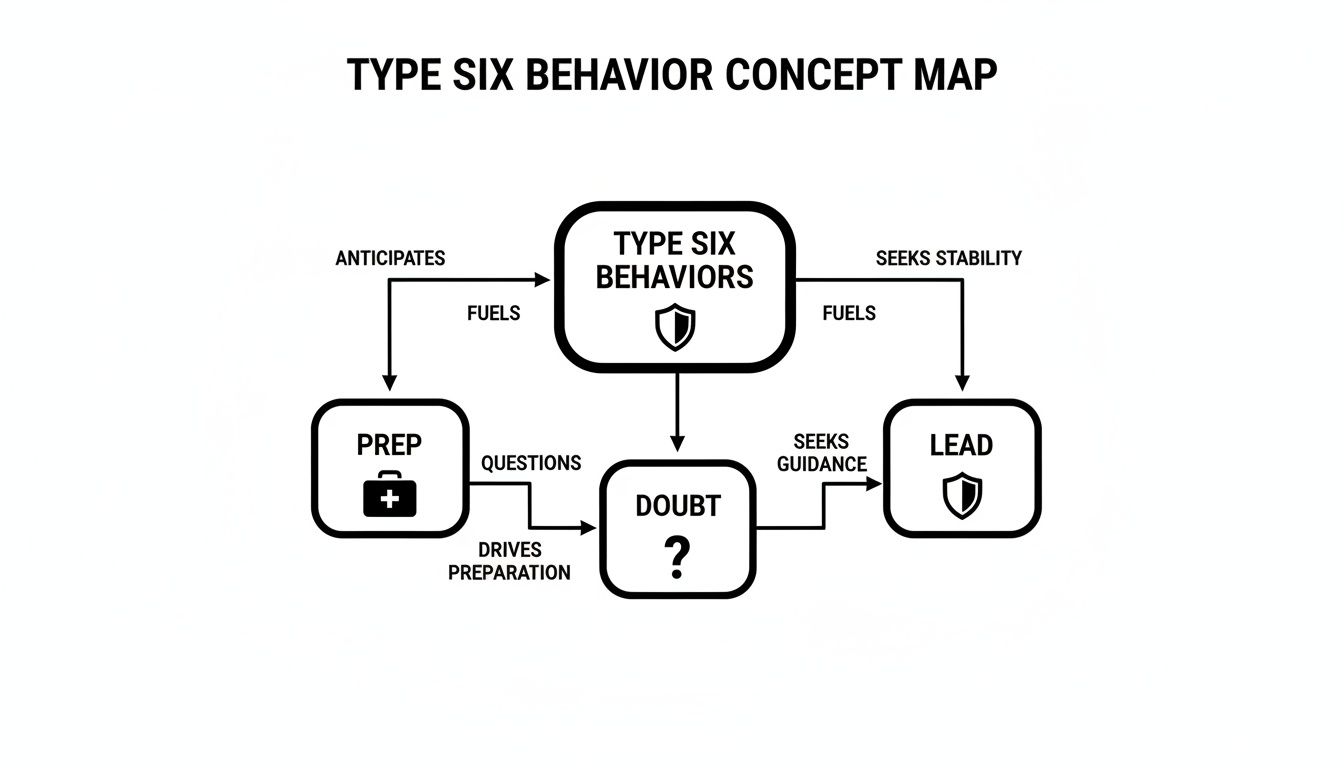
Visualizing Core Behaviors
The map below highlights how prep , doubt , and leadership impulses interconnect for a Type Six.
Case Study Comparisons
Real life brings theory into focus:
• A • 6w5 security analyst • triple-checks server logs to prevent breaches.
• A • 6w7 community coordinator • sparks trust with impromptu coffee chats.
• A • Self-Preservation Six • runs weekly home-safety drills.
• A • Social Six • hosts debriefing huddles after a team setback.
Each scenario illustrates how wings and instincts shape problem-solving and group dynamics.
Applying Insights For Growth
Tailor your next steps based on what you discover:
• Block off 10 minutes for a “doubt review” before jumping into tasks.
• Lead monthly feedback circles to strengthen team bonds.
• Journal • three things • you’re grateful for each evening to break fear loops.
Key Takeaways
• 6w5 • wings favor solitude, data-gathering, and careful prep.
• 6w7 • wings energize teams, spark optimism, and rally support.
• Spotting your instinctual variant and health level unlocks focused growth strategies.
Use these side-by-side insights—think of the Six as both a sentinel and a community architect—to guide your path toward greater confidence and collaboration.
Navigating Relationships And Workplace Dynamics
Type Sixes crave a solid foundation in both love and work. Their unwavering loyalty often comes hand-in-hand with a need for reassurance. Think of them as guardians who double-check every lock before bedtime.
In teams or partnerships, they lean on clear signals. Give them a map, and they’ll navigate confidently. Leave them guessing, and they’ll circle back to you until the path is certain.
Relationship Tips
Sixes show they care by preparing for every “what if.” One American couple even built shared checklists for weekend outings and emergencies—no detail was too small.
Actionable steps for partners include:
• Offer regular affirmations to build their • trust • .
• Set a weekly check-in to break any anxious loops.
• Confirm plans early to honor their need for clarity.
“Consistency builds a safe space that nurtures loyalty.”
These small routines turn routine check-ins into emotional anchors. Over time, Sixes learn that a flexible plan can still feel rock-solid. For example, during a surprise anniversary trip, the couple agreed to trust each other’s last-minute restaurant choices—which made the trip feel both safe and spontaneous.
Workplace Strategies
Before a meeting, a Six teammate might ask for a detailed agenda and clear objectives. Meeting their style eases their nerves and boosts productivity.
Use these guidelines to foster smooth collaboration:
For example, an American project manager shared a timeline in a central doc and saw team anxiety drop by 45% . As a practical follow-up, she also held brief daily stand-ups to field last-minute questions.
| Support Action | Benefit for Six |
|---|---|
| Clear Meeting Agendas | Reduces pre-meeting anxiety |
| Predictable Feedback Cycles | Boosts confidence and performance |
| Open Door for Questions | Limits overthinking |
Pair these tactics with genuine recognition of their vigilance. Acknowledging their concerns before rushing ahead transforms worry into dependable leadership.
Case Study Example
A marketing team member who fretted over shifting deadlines was invited onto the planning call. After seeing the full picture, they volunteered to draft contingency plans—and soon became the go-to risk assessor.
Check out our guide on relationship dynamics for more insights. Read also: Learn more about supporting partner dynamics in our article The Enneagram Compatibility.
In both personal and professional settings, validating a Six’s core drive for security paves the way for growth. When you pair predictability with respect, their fierce loyalty shines.
Supporting Six Colleagues
Backing a Six coworker builds a culture of trust. You can strengthen those bonds by:
• Checking in after high-pressure meetings to offer reassurance.
• Sharing any project changes immediately to prevent panic.
• Inviting them to planning sessions so they feel included.
“Invite Sixes into the process and watch their dedication deepen.” — Leadership Coach
Concrete example: A team lead sent a quick daily status note every morning. Over time, the Six on the team volunteered to lead risk audits and improved overall delivery by 30% .
By weaving these practices into daily routines, teams gain vigilant allies who spot issues early. The predictability you provide lets Sixes move from doubt to confident contribution.
Actionable Growth Strategies for Enneagram Type 6
Loyal Sixes often feel most at ease when they have a clear roadmap. This section lays out simple journaling prompts, calming breathwork, and decision trees—tools designed to turn second-guessing into steady forward motion.

Start with a daily journal entry that gently pries open a single worry. Answer questions such as “What if this worry never comes true?” and watch how your perspective shifts. For instance, Emily wrote a weekly entry on what she’d do if a client canceled at the last minute—and realized she could easily pivot to another project.
• Identify the root cause • of a persistent doubt to see exactly where trust gaps form.
• Write a positive outcome statement • to pivot away from fear and toward possibility.
• Review entries weekly • to notice patterns and celebrate small breakthroughs.
Simple Breathwork To Calm Vigilance
When your mind feels like it’s ringing alarm bells, a brief breathing break can reset the system. Think of it as hitting “pause” on your overthinking playlist.
Soon, the tight knot of anxiety starts to loosen, making room for clearer thinking.
Additionally, decision trees can map out each fork in the road when doubt knocks.
| Tool | Purpose | Example Use |
|---|---|---|
| Journaling | Uncover hidden fears | Daily one fear prompt |
| Breathwork | Soothe the nervous system | Box breathing cycles |
| Decision Trees | Structure choices under doubt | Map yes/no paths for small goal |
Case Study: Erin practiced a five-minute talk at her meetup and saw her confidence jump by 25% .
Bite-Sized Goal Setting
Tackle one small uncertainty each day to stretch your comfort zone in manageable steps. It’s like dipping your toes into a new pool instead of cannon-balling.
• Use Cognitive Behavioral Therapy techniques to challenge fear-driven thoughts.
• Join a supportive Sixes meetup for peer accountability.
• Read • The Courage to Be Disliked • for fresh insights on building trust.
Local workshops or online forums offer spaces to share stories and cheer each other on.
Next Steps With Professional Guidance
Sometimes, a trained coach or therapist shines a light on blind spots. Approaches like Acceptance and Commitment Therapy help you lean into uncertainty rather than avoid it.
Sixes build resilience when they face small uncertainties and celebrate each win.
Apps and online courses let you practice at your own pace—whether it’s a mindfulness series or a trust-building module. Keep a simple habit tracker to note when you journal, breathe, or test a tiny risk.
• Track three triggers that spark doubt and apply a quick breathing or journaling fix.
• Celebrate each step into the unknown, no matter how small.
• Share victories with an accountability partner or online support group.
Tracking Progress For Lasting Change
Over time, those micro-challenges morph into a sturdy scaffold of confidence. Consistency flips “What if?” into “What’s next?”
Check out our guide on Managing Fear-Based Decision Making for more tactics on choosing with courage.
Integrating Strategies Into Daily Life
Schedule each exercise like an important meeting with yourself. Try journaling before your breathing cycle, or pair decision mapping with a quick stretch.
Practical Tip: Jot a single insight as an anchor before you dive into work or wind down for the evening.
Week by week, hesitation gives way to clarity. Celebrate every milestone—grab a cup of tea, take a walk, or simply pause and acknowledge your growth.
Resilience emerges when fear is met with small, repeated acts of courage.
Use these strategies day after day to climb through the health levels and become a more self-assured Six. Start now and watch how your steady steps transform uncertainty into your greatest ally.
Frequently Asked Questions About Enneagram Type 6
Trust and suspicion dance daily in the Six world. You might draft a “just-in-case” playlist or swap checklists with a friend to feel grounded. Here are the questions that keep Sixes up at night—and the practical answers that help them rest a little easier.
What Truly Defines a Type Six Personality? Sixes live at the crossroads of trust and caution. Their go-to question is, “Can I count on this?” That core need for security often shows up as fierce loyalty—and a habit of firing off last-minute reminders to teammates. For example, Laura sends a quick “all set?” text before a big event to ensure everyone’s on the same page.
How Can You Spot a 6w5 Versus a 6w7? Your wing adds a distinct flavor:
• 6w5 • : Analytical, reserved, data-driven. Prefers solo research and quiet preparation.
• 6w7 • : Gregarious, optimistic, network-oriented. Thrives on group brainstorming and social energy.
Answering Six Core Doubts
Which Daily Practice Helps Manage Six Anxiety? Small, consistent routines can interrupt the worry loop. Try:
• Box breathing • (2 minutes) to reset your nervous system
• A • three-minute “what-if” timer • to give doubt a designated slot
• Nightly gratitude notes • focused on safety to end each day on firm ground
• Regular • check-ins with a friend • for an extra layer of reassurance
For instance, Mike uses a quick gratitude note each night to note one thing that went right, easing his pre-sleep concerns.
What Growth Exercise Creates the Biggest Payoff? Action is the antidote to doubt. Consider:
• Weekly • five-minute speaking drills • —one American Six reported a • 30% • boost in self-trust
• Journaling prompts like “What if things go well?” to flip the overthinking script
“Sixes thrive when they anchor uncertainty in concrete steps,” notes an Enneagram coach.
How Do You Interpret Enneagram Test Results? Treat your score as a roadmap, not a jail cell. Dive into your:
• Wings, triads, and instincts • to pinpoint next steps
• Insights that spark curiosity instead of boxing you in
Community And Growth
Can Community Support Boost Six Resilience? Absolutely. Peer circles and online forums offer real-time reassurance. One Six in Chicago reported a 50% drop in anxiety after six weeks of monthly meetups. Shared stories turn solo worries into collective wisdom.
Integrate these tips into your routine:
• Log daily wins in a simple habit tracker
• Celebrate each tiny victory
Ready to dive deeper? Discover your full type profile on Enneagram Universe and start your journey today!