What Is My Love Language Test? Find Your Love Style
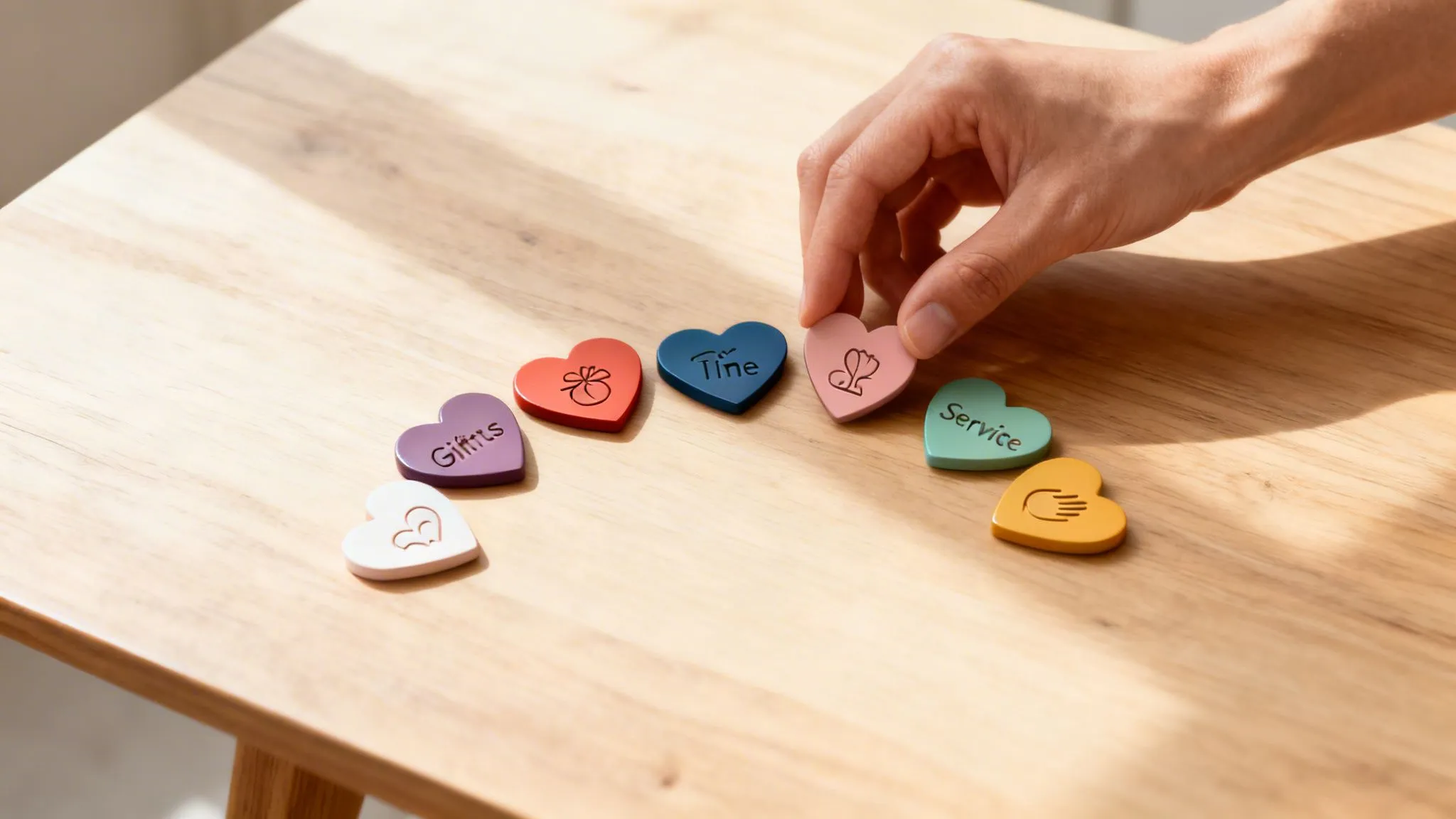
Ever feel like you’re sending out love signals that just aren't landing? Like your heartfelt gestures are getting lost in translation? You're definitely not alone. The what is my love language test is a surprisingly simple yet profound tool for cracking the code on how you and your favorite people give and receive affection.
Think of it as the ultimate cheat sheet for your relationships.
Why Is Everyone Suddenly Asking, "What Is My Love Language?"
Have you ever spent weeks meticulously planning a surprise party (a classic Act of Service ), only to see your partner’s face really light up when they read the heartfelt card you almost forgot to write ( Words of Affirmation )? Or maybe you're craving a long, meaningful chat ( Quality Time ), but your best friend keeps showing their love by hunting down the perfect, quirky gift ( Receiving Gifts ).
These little disconnects are exactly why the five love languages have struck such a chord with millions. It’s not that anyone is ungrateful. It’s that we’re all speaking different emotional dialects.
The whole idea, first introduced by Dr. Gary Chapman in his bestselling book, is that we each have primary ways we experience and express love. When you show affection in a language your partner doesn't "speak" fluently, your best efforts might get missed, leading to that all-too-familiar cycle of frustration and feeling misunderstood.
Figuring out your primary love language and the languages of those around you is a total game-changer. It helps you finally recognize love when it's being offered and show your own affection in ways that will be truly felt and cherished.
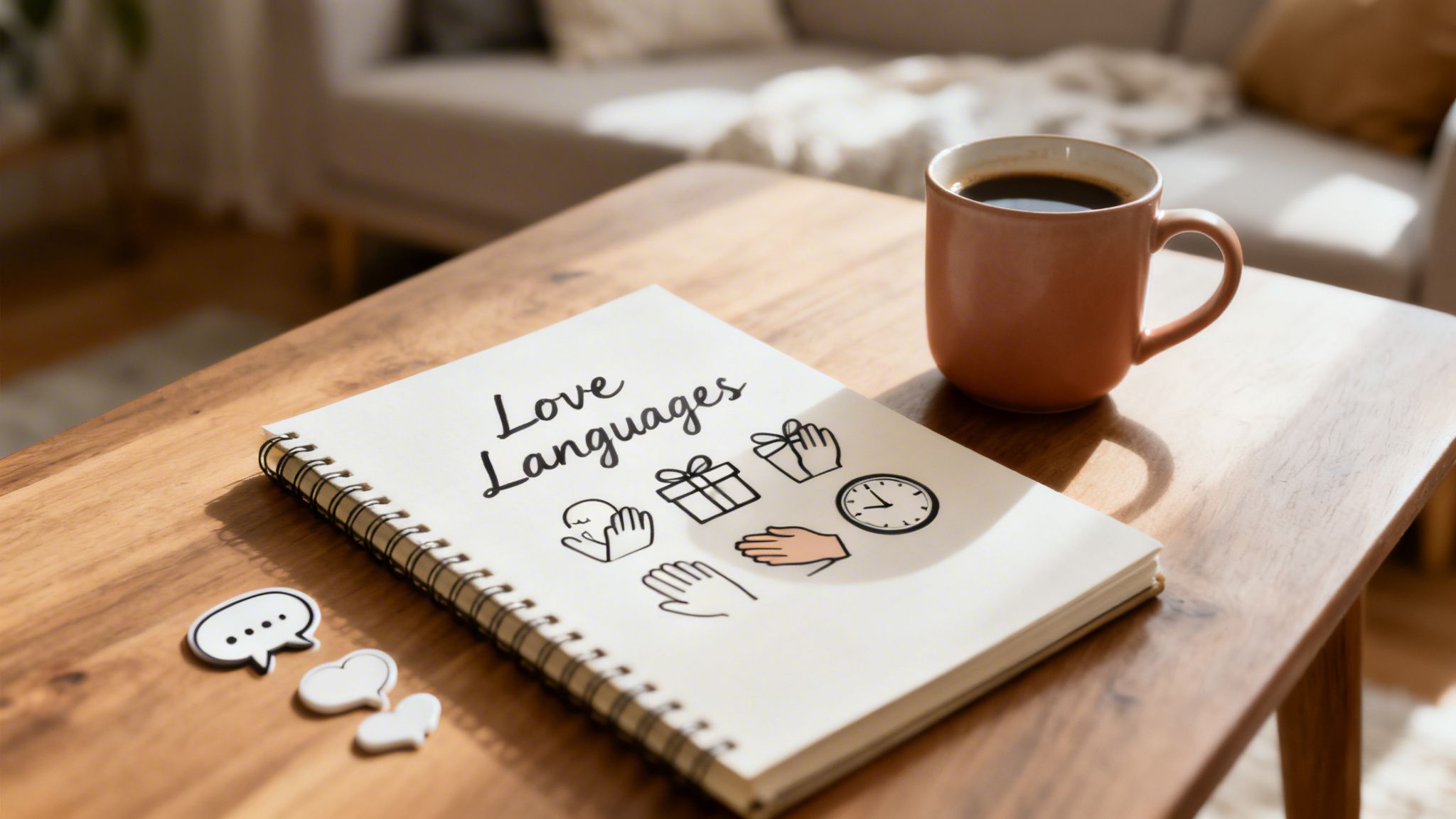
A Quick Tour of the Five Languages
At its heart, the theory says we all have a primary and secondary love language. These are the specific ways we feel most seen, valued, and, well, loved .
Let's do a quick fly-by of the five love languages . I've put together a handy little table to give you the gist at a glance.
The Five Love Languages at a Glance
| Love Language | What It Really Means | Example of How to Show It |
|---|---|---|
| Words of Affirmation | Feeling loved through spoken or written praise, encouragement, and kind words. It’s about the why behind the "I love you." | Sending a text that says, "Thinking of you and so proud of how you're handling everything right now." |
| Acts of Service | Feeling cared for when someone does something thoughtful for you to lighten your load. Actions speak louder than words. | Making their coffee in the morning exactly how they like it, or tackling a chore you know they hate. |
| Receiving Gifts | Feeling cherished through the thought and effort behind a gift. It’s the tangible symbol of affection, not the price tag. | Picking up their favorite snack on your way home or finding a small souvenir that references an inside joke. |
| Quality Time | Feeling adored when you have someone's complete, undivided attention. No phones, no TV, just pure, focused connection. | Setting aside 20 minutes to just sit and talk, making eye contact and actively listening to their day. |
| Physical Touch | Feeling connected through physical contact, from a reassuring hug to holding hands. It's about safety, comfort, and closeness. | Giving a long hug after a tough day, placing a hand on their back, or cuddling on the couch. |
Now that you have the cheat sheet, let's explore what each of these really looks and feels like in the wild.
Words of Affirmation
This language is all about using words to build someone up. It goes way beyond a simple "I love you." It's about expressing unsolicited compliments, offering genuine encouragement, and showing verbal appreciation. For someone who speaks this language, hearing why they are loved is everything. A text message saying, "You're doing an amazing job handling all that stress at work," can feel more loving than any diamond ring. For example, leaving a sticky note on the bathroom mirror that says, "You're going to crush your presentation today!" is a perfect way to speak this language.
Acts of Service
For these folks, actions truly thunder louder than words. This language is all about doing things you know the other person would appreciate, easing their burdens and making their life a little smoother. Think of it as anticipating their needs. It could be making your partner's coffee before they even wake up, quietly taking care of a dreaded chore like taking out the trash without being asked, or scraping the ice off their car on a freezing morning. These gestures are seen as powerful, tangible expressions of love.
Receiving Gifts
This is the most misunderstood language of them all! It's not about being materialistic. It's about the thoughtfulness, effort, and love behind the gift. A perfect present proves you were thinking of them, that you pay attention, and that you truly know them. The gift is a physical symbol of affection. It doesn't have to be expensive; a funny magnet that reminds them of an inside joke, or picking up their favorite brand of chips just because you saw them at the store, can feel like the grandest of romantic gestures.
Quality Time
For a person with this primary love language, nothing on earth says "I love you" like your undivided attention. This means putting the phone away (face down!), turning off the TV, and just being together. It’s about creating a space where you can share your thoughts and feelings without distraction. For instance, taking a 20-minute walk together after dinner with a strict "no phones" rule can be infinitely more meaningful than a whole evening spent in the same room but in separate, digitally-distracted worlds.
Physical Touch
This language isn't just about what happens in the bedroom. It’s about expressing care, comfort, and connection through touch in everyday life. A reassuring hug for your partner after a brutal day at work, a gentle hand on their shoulder during a tough conversation, or simply holding hands while walking down the street are all potent expressions of this language. For them, a simple act like a partner reaching over to squeeze their knee during a movie can communicate more love than an elaborate speech.
So, What Are the 5 Love Languages,
Really
?
Alright, you've heard the terms bandied about. But let's get past the buzzwords and into what these languages actually look and feel like on a Tuesday afternoon or a stressful Friday night. This is where the lightbulb goes off, and you start seeing yourself—and the people you love—in these descriptions.
Forget grand, movie-montage gestures. Real love often speaks in whispers. It’s found in the small, consistent actions that fill up our emotional bank account, drop by drop.
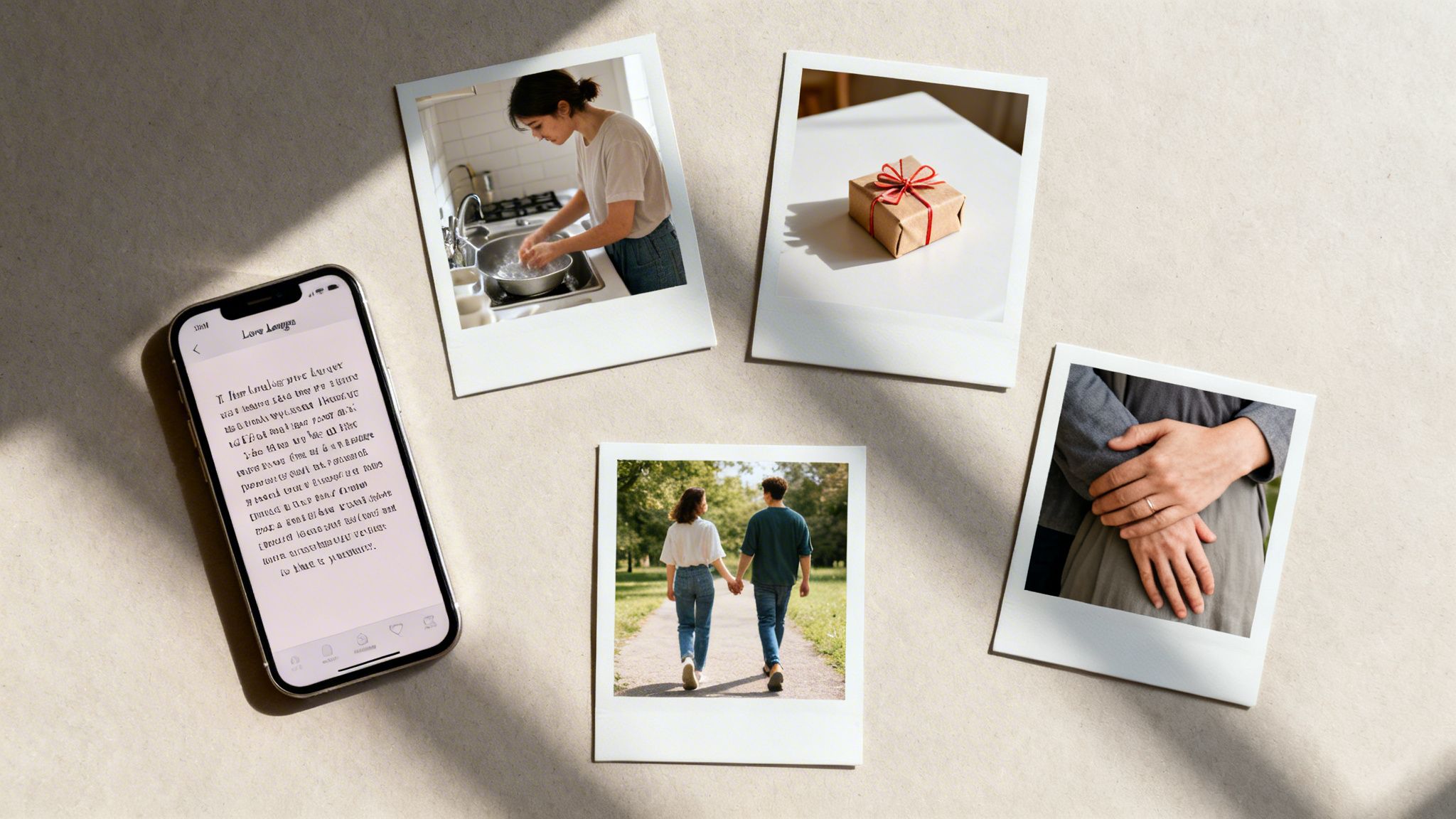
Words of Affirmation: More Than Just a “Love Ya”
If Words of Affirmation is your native tongue, then spoken and written words are the air your heart breathes. This isn't about fishing for compliments; it’s about hearing specific, heartfelt words that make you feel truly seen .
Think about the jolt of encouragement from a text that reads, "You're going to kill it in that meeting today!" Or a friend commenting on your post, "I’m so proud of how you navigated that tough situation." These words aren't just nice—they’re life-giving. A practical example is a partner saying, "I really admire how patient you were with the kids tonight."
On the flip side, for someone who thrives on affirmation, biting criticism or a total lack of verbal encouragement can feel like a punch to the gut. It's not about needing a cheerleader 24/7, but about knowing your existence and efforts are noticed and valued out loud.
Acts of Service: The Language of "I Got This for You"
This love language is for the people who believe actions thunder while words just whisper. For someone whose primary language is Acts of Service , love is a verb. It’s about someone stepping in to lighten your load and make your chaotic life a little more manageable.
You see it everywhere once you know what to look for:
• Your partner gets up a few minutes early to make your coffee just how you like it, giving you a smoother start to a hectic day.
• Your roommate, seeing you’re swamped, quietly takes out the overflowing trash without being asked.
• Your dad shows up with his toolbox to help you assemble that nightmarish piece of flat-pack furniture.
For this person, a broken promise or someone adding to their burden feels like a deep betrayal. The most romantic thing you can say is, "Don't worry about that, I'll take care of it." It screams partnership and profound respect for their energy.
Receiving Gifts: The Power of a Perfect Little Token
Often misunderstood as being materialistic, the Receiving Gifts love language is all about the thought and care behind a tangible object. The price tag is almost always beside the point. The gift itself is a physical symbol of the message: "You were on my mind."
This could be a silly keychain from a business trip that references an inside joke, or your bestie showing up with your favorite donut on a rough day. A practical example is your partner bringing home a plant for your desk because they know you've been wanting to brighten up your workspace. For this person, a forgotten anniversary or a thoughtless, last-minute present can feel like a direct hit, suggesting their feelings were forgotten, too. It’s the personal touch that counts.
Quality Time: The Currency of Pure, Undivided Attention
In a world buzzing with notifications and distractions, Quality Time might be the most precious love language of all. A recent 2026 Hims study of Americans actually found quality time was the most popular love language, with 31.5% of people choosing it. It even beat out physical touch ( 27.5% ), showing a deep hunger for presence across Gen Z, Millennials, and Gen X. You can dig into more of the popular love language findings from the survey to see the full breakdown.
This isn't just "being in the same room." It's about giving someone the gift of your focus. It’s putting your phone face down on the dinner table. It’s a 20-minute walk where you actually listen, without one eye on your smartwatch. A great example is setting a weekly "date night" at home, where you cook a meal together and just talk, with no screens allowed.
For a Quality Time person, constant interruptions, postponed plans, or the feeling that you're only half-listening is incredibly painful. It’s never about the number of hours you log together; it's all about the quality of the connection within those minutes.
Physical Touch: The Primal Comfort of Connection
Finally, we have Physical Touch . This is a powerful, primal language that communicates love, safety, and reassurance without a single word. And no, it’s not just about what happens in the bedroom; it’s woven into the very fabric of everyday connection.
Think about the simple yet profound impact of these moments:
• A reassuring hand on your shoulder during a tense family dinner.
• A long, deep hug the second you walk through the door after a terrible day.
• Casually holding hands while navigating a crowded street.
A practical example is your partner instinctively reaching out to put a hand on your back as you walk through a crowded room. For someone who speaks this language, a lack of physical contact can create a painful chasm of emotional distance. These small, consistent gestures are the anchors that make them feel safe, secure, and truly loved.
How to Take the Test and Read Your Results
Alright, deep breaths. This is the moment you've been waiting for—that big "aha!" where the tangled mess of your own emotional needs finally starts to make sense. Taking a "what is my love language test" is your first step, and thankfully, it's a whole lot more fun than any pop quiz you ever took in school. There are no wrong answers here, just your gut feelings.
Most tests are pretty straightforward. You'll face a bunch of "would you rather" questions that pit two different expressions of love against each other. For instance, you might see a choice like this:
• A) Your partner surprises you with a really thoughtful gift.
• B) Your partner wraps you up in a long, warm hug.
The trick is to not overthink it. Seriously. Your first, gut-level instinct is usually the right one. This isn't about picking what sounds "nicer" or what you think you should want. It’s about what would genuinely make you , in that moment, feel completely adored.
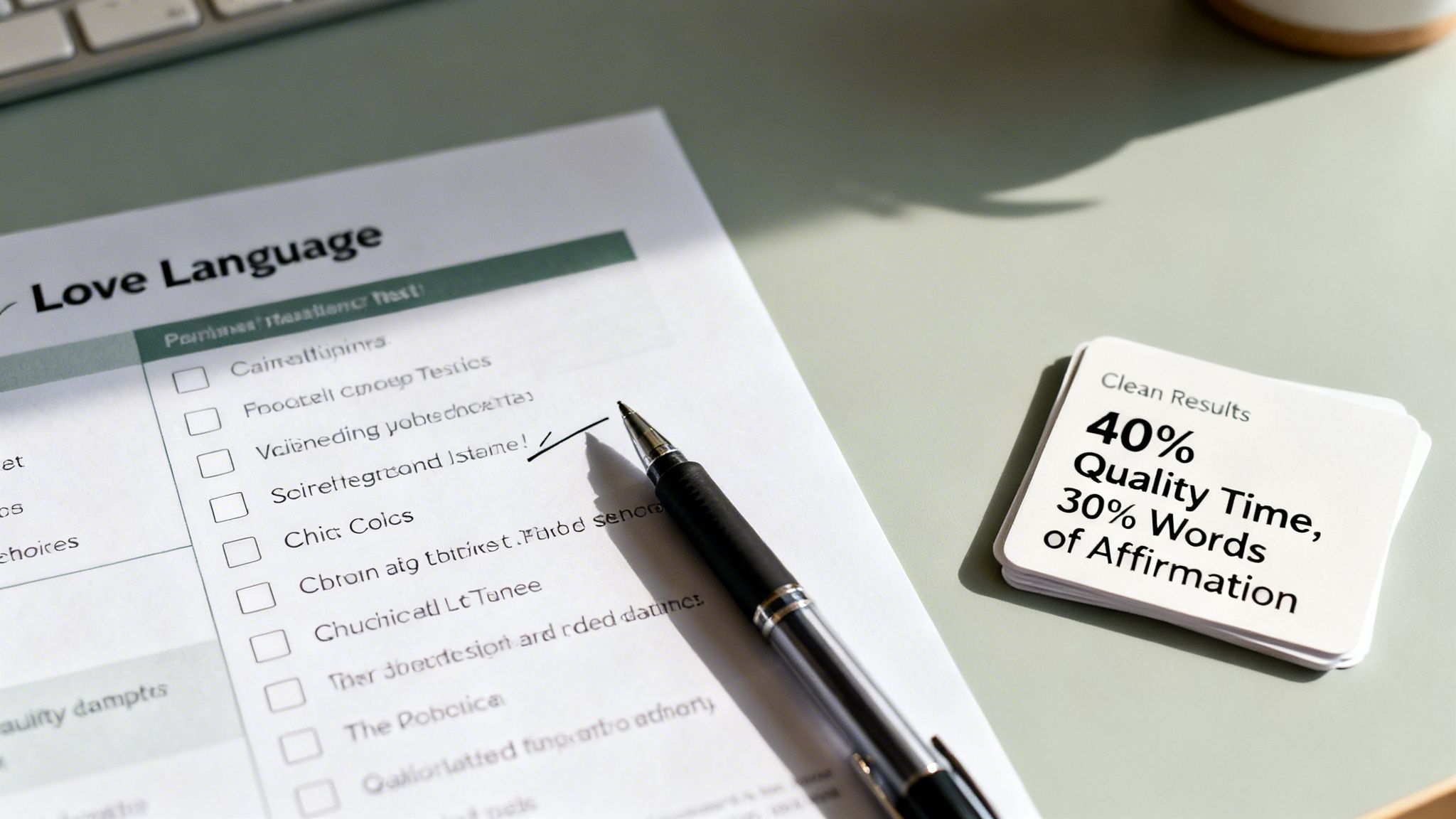
This forced-choice format is secretly brilliant. It makes you prioritize what truly fills your emotional tank, bypassing your logical brain and going straight to the heart. As you click through the answers, a pattern of your deepest needs will begin to take shape.
Making Sense of Your Love Language Profile
Once you're done, you’ll get your results, usually as a ranked list or a breakdown with percentages. Here's a little spoiler alert: almost nobody has just one love language. We're all a beautiful, complicated mix! Your results will highlight your primary language—the one that shouts the loudest—and likely a close secondary one.
Think of it like being bilingual. You might be fluent in English (your primary language) but also pretty darn good at ordering food in Spanish (your secondary language). Both are a key part of how you communicate and connect.
Let's break down a sample result to see what I mean:
• Quality Time: • 40%
• Words of Affirmation: • 30%
• Physical Touch: • 15%
• Acts of Service: • 10%
• Receiving Gifts: • 5%
This profile tells a story. For this person, the ultimate expression of love might be a long walk with no phones out ( Quality Time ) where their partner also says, "I really admire how you handled that tough situation at work" ( Words of Affirmation ). It’s the combo that creates that powerful feeling of being truly seen and valued. This kind of self-discovery is a huge step in personal growth, and you can dig deeper into how to become more self-aware in our dedicated guide.
It Is Not a Rigid Box
Here’s the thing: those percentages aren't meant to brand you for life. They're just a snapshot of your emotional needs right now. Your love language profile can, and probably will, shift and evolve with different life stages, relationships, and experiences.
A common mistake is seeing your results as a label to stick on your forehead. Don't do that. Instead, see them as a new, powerful lens for understanding yourself. This isn't about being squeezed into a box; it's about getting the vocabulary to finally ask for what you need and to better understand what the people you love need from you.
Putting Your Love Language Into Action
Alright, you’ve taken the test and have your results in hand. Now what? This is where the real work—and the real fun—begins. Knowing your love language is like getting a treasure map; it’s fascinating on its own, but the real adventure starts when you actually use it to find the gold in your relationships.
Think of it as moving from theory to practice. You're about to turn those "aha!" moments from the quiz into real, lasting connections. And not just with your partner, but with friends and family, too.
The Art of Translation: Bridging Different Love Dialects
One of the most common discoveries is that you and your partner speak completely different languages. It can be a real head-scratcher. What happens when a Physical Touch person marries someone who expresses love through Acts of Service ? It often feels like you’re broadcasting on FM radio while they’re listening on AM.
This kind of mismatch is a classic recipe for quiet resentment. The Physical Touch person feels lonely and wonders, ”Don’t they want to hold my hand anymore?” Meanwhile, the Acts of Service partner feels totally taken for granted, thinking, ”I just spent three hours fixing the leaky faucet for them, and they didn't even notice!”
The secret isn’t to force your partner to learn a new language overnight. It's to become bilingual in love. You just need a good translation guide.
Let’s look at a classic scenario. Mark’s top love language is Physical Touch , and his wife Sarah’s is Acts of Service .
• Mark's Mistake: • He shows love by wrapping Sarah in a huge bear hug while she’s frantically trying to get dinner on the table. For her, it feels less like affection and more like an obstacle.
• Sarah's Mistake: • She details Mark’s car from top to bottom on a Saturday morning as a huge surprise. He’s grateful, sure, but what his heart was • really • craving was to just cuddle on the couch and watch a movie together.
The fix? Simple translation. Sarah learns that giving Mark a long, meaningful hug before she starts cooking makes him feel seen and connected all evening. And Mark figures out that saying, "Hey, why don't you relax? I'll handle the dishes tonight," is basically the most romantic sentence he can utter in Sarah-speak.
A Practical Playbook for Mismatched Languages
Learning to speak your partner’s language is a conscious act of love, especially when it doesn't come naturally. It’s a choice. Here are some simple, actionable ways to start bridging that gap.
If Your Partner is Words of Affirmation (and you're not a talker):
• Set a daily "praise" alarm: • Seriously, set a reminder on your phone. A quick, specific text like, "You're going to crush that presentation today. I'm so proud of you!" can fuel them for hours.
• Narrate the good stuff: • Call out the little things you appreciate as they happen. "This coffee you made is amazing" is a small deposit that yields huge returns in their emotional bank account.
If Your Partner is Quality Time (and you're all about Acts of Service):
• Schedule "undivided attention" zones: • Block out • 20 • minutes on the calendar where phones are off-limits and you just connect. Treat it with the same importance as a work meeting.
• Team up your languages: • Try this: "I'll tackle the laundry ( • Acts of Service • ) so we can have more time to just hang out and talk later ( • Quality Time • )."
Beyond Romance: Tuning Into Friends and Family
This framework isn’t just for couples—it’s a game-changer for all your important relationships. You might also find some great, universally applicable ideas in these relationship and romance tips for people with disabilities , which beautifully expand on these core principles of connection.
Think about it. Maybe your dad’s love language is Acts of Service . Instead of another birthday phone call ( Words of Affirmation ), showing up to help him with that yard project he’s been dreading will speak volumes more. Or maybe your best friend’s language is Receiving Gifts . A small, silly present that references an inside joke will mean a thousand times more to them than a long heart-to-heart.
These are small shifts that create a massive impact. For even more ideas, check out our guide on relationship communication exercises .
Ultimately, putting the love languages into action is all about empathy. It's the deliberate choice to step outside your own comfort zone, meet someone where they are, and speak the language their heart understands best.
Unlock Deeper Insights by Pairing Love Languages and Enneagram
So you’ve taken a "what is my love language test" and figured out the "what" of your emotional needs. That's fantastic! But are you ready for the "why" ?
This is where things get really interesting. Pairing your love language with your Enneagram type is like switching from standard definition to 4K—suddenly, the whole picture of your relationship dynamics becomes richer and clearer. Your love language is the specific dialect you speak, but your Enneagram type is the core motivation that made you learn that dialect in the first place.
Think of it this way: knowing you prefer Acts of Service is great. But understanding that you crave those acts because your Enneagram type needs to feel secure and supported? That’s a game-changer. It’s the next level of self-awareness.
How Enneagram Motivations Shape Your Love Language
Your Enneagram type points to your deepest fears and desires, and trust me, those are the engines driving what makes you feel loved. A grand gesture that one Enneagram type finds deeply moving might completely fall flat for another, even if they share the same primary love language. The why behind the action is what truly lands.
Let's get practical with a few examples:
• Enneagram Type 3 (The Achiever): • Driven by a need to feel valuable, a Type 3 might shower their partner with impressive gifts ( • Receiving Gifts • ). Why? Because those gifts are a tangible symbol of their success. But deep down, what they're often desperate for are • Words of Affirmation • that recognize them for • who they are • , not just what they do. Hearing "I love you just for being you" can mean more than any five-star vacation.
• Enneagram Type 9 (The Peacemaker): • These folks are all about inner harmony. A Type 9 will naturally offer • Quality Time • because it creates a cozy, conflict-free zone. Yet, because they often struggle to assert their own needs, their secret wish might be for their partner to take initiative with • Acts of Service • . Having someone take a chore off their plate without being asked feels like the ultimate support, preserving that precious inner peace.
This is where you see the beautiful overlap between the languages. An action can speak volumes on multiple channels.
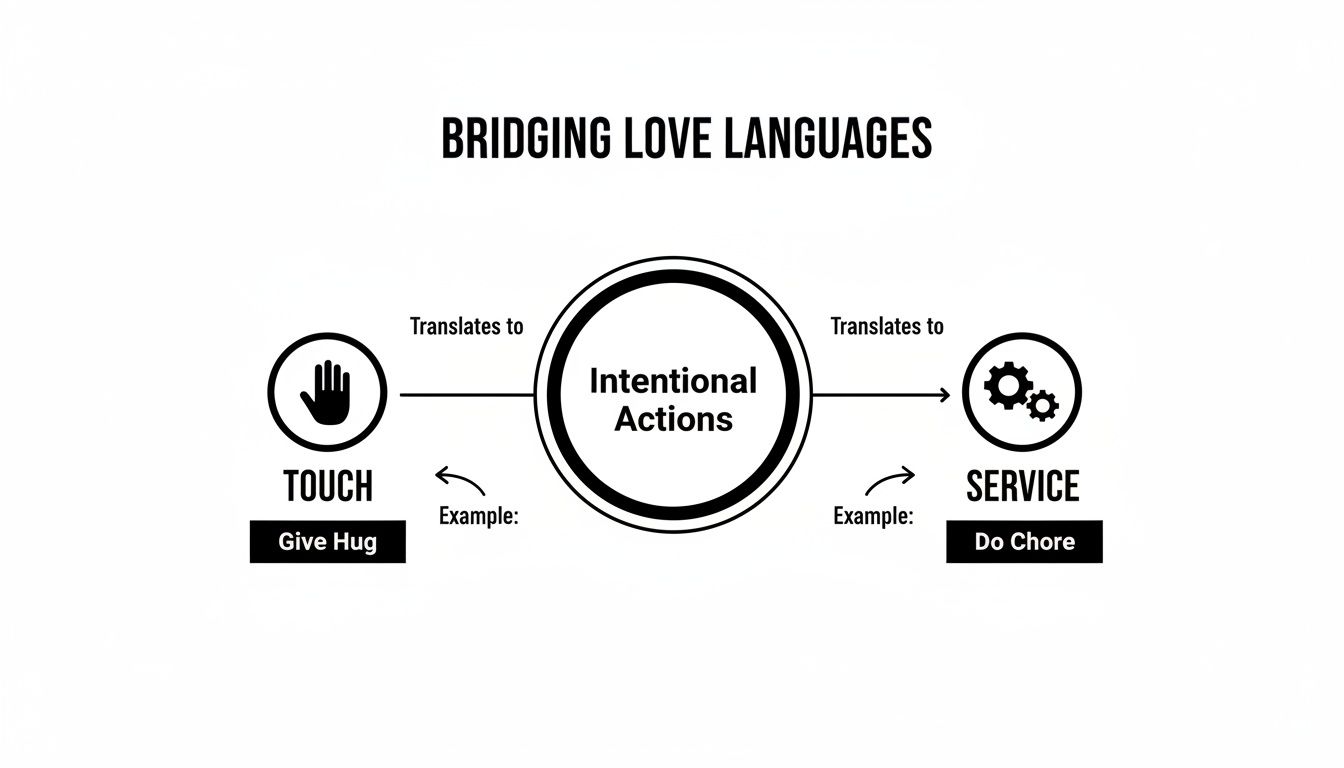
Whether it’s a hug or doing the dishes, the image shows how both are simply intentional actions that communicate care. They bridge the gap between emotional connection and practical support.
A Deeper Dive Into Type-Specific Connections
The magic of combining these two systems can’t be overstated. Gary Chapman’s book, The 5 Love Languages: The Secret to Love That Lasts , wasn't just a bestseller; it was a cultural phenomenon. Since its release in 1992, it has sold over 20 million copies and been translated into more than 50 languages. That tells you something profound: we are all desperately trying to understand how to connect better. You can read more about the science behind love languages on greatergood.berkeley.edu to see how deep this runs.
The Enneagram gives that universal quest a personalized roadmap.
Let's see this in action with a couple more types:
Want to explore this synergy even more? Our guide on Enneagram types in relationships is the perfect next step. Honestly, understanding both frameworks feels like having a cheat code for building stronger, more empathetic bonds.
Your Top Love Language Questions, Answered
Alright, so you've taken the "what is my love language test." Awesome! But finishing the quiz is often just the beginning, and it usually sparks a whole new set of questions. Let's dive into the big ones that pop up and get you feeling confident about using this stuff in your real life.
Can My Love Language Change Over Time?
You bet it can. Your love language isn't a fixed, lifelong diagnosis. It’s more like your current emotional appetite. You might always have a soft spot for pizza ( your primary language ), but some days you’re desperately craving a salad. Life has a way of changing our needs.
For instance, after a brutal month at work, you might suddenly find yourself valuing Acts of Service way more than a sweet compliment. And for new parents? The worth of a simple, quiet hug—some pure Physical Touch —can feel like it's worth more than gold. It's actually a great idea to retake the test every couple of years, just to check in with yourself and see what you’re truly craving now.
What if My Partner and I Have Different Languages?
First off, don't panic. This is completely normal—in fact, it's the most common scenario. Think of it as a cool opportunity, not a deal-breaker. It just means you both get to become bilingual in love. The goal is to consciously learn to speak your partner’s native love dialect.
So, if your language is Words of Affirmation and theirs is Acts of Service , you have your assignment. They can try leaving you a note with a specific compliment, and you can try tidying up the kitchen without being asked. It might feel a little clunky at first, like learning any new language, but that effort builds an incredibly deep and satisfying connection.
Are the Five Love Languages Backed by Science?
Here's the deal: The five love languages came from Dr. Gary Chapman's decades of hands-on experience as a marriage counselor, not from a formal, peer-reviewed study. So, while some academic research on the topic has shown mixed results, its massive popularity comes from one simple fact: it works in the real world.
It’s not a clinical diagnosis. It's a brilliantly simple framework for starting conversations that couples desperately need to have about their emotional needs. Think of it as a conversational toolkit that has helped millions of people feel more seen and loved. For an even richer picture, you can explore other tools for mastering personality types in relationships , which add another layer of understanding.
At Enneagram Universe , we're huge believers that understanding your core "why" is the secret to thriving in your relationships. Our free, scientifically validated Enneagram test helps you discover your core motivations so you can build stronger, more authentic connections with everyone in your life.