Personality Test for Leadership: Unlock Stronger Teams Today

So, what exactly is a personality test for leadership ? Think of it less like a report card and more like a user manual for the human mind. It’s a tool designed to uncover the core drives, communication quirks, and untapped potential of leaders and the people they manage. It goes way beyond just watching how people behave and gives you the "why" behind their actions, turning good managers into truly great leaders.
Why Personality Tests Are a Leader's Secret Weapon

Imagine trying to lead an orchestra without knowing who plays the violin and who plays the drums. You might get some sound, sure, but you definitely won't get a symphony. Leading a team without understanding individual personalities is pretty much the same chaotic gamble. A good personality test for leadership is your conductor's score, showing you exactly what unique instrument each person brings to the group.
A common myth is that these tests are about stuffing people into neat little boxes. That’s not it at all. When used correctly, they’re about unlocking a much deeper level of self-awareness. They don't just spotlight a leader's strengths; they also shine a light on their potential "derailers"—those go-to strengths that can flip and become weaknesses when the pressure is on.
From "Aha!" Moments to Actionable Strategy
Look, knowing yourself is great, but real leadership is about using that knowledge to bring out the best in everyone else. Once you get a handle on your own default settings and behavioral patterns, you can start making conscious choices to connect with people in a way that actually works. This is where those abstract insights become concrete results. For instance, a leader who realizes they’re wired to avoid risk can make a point to actively listen to the more daring, innovative voices on their team.
"Personality reveals characteristic patterns of thoughts and feelings, but leaders can develop new behavior regardless of their type. The goal is for leaders to understand their wiring as a starting point for growth, not an excuse for why they 'can’t' do something."
By bringing a quality personality assessment into the mix, leaders give their team a common language to talk about their differences. It’s a game-changer. Suddenly, frustrating conflicts become opportunities to collaborate, and communication breakdowns are bridged with genuine empathy. This shared understanding sets the stage for huge improvements, like:
• Smarter Delegation: • • Practical Example: • You learn that a team member is an Enneagram Type 7 who thrives on new ideas. You can delegate brainstorming for a new marketing campaign to them, knowing they'll be energized, instead of assigning it to a detail-oriented Type 1 who might find the ambiguity stressful.
• Improved Communication: • You learn to frame your message so it lands well with different personality types, making sure everyone is on the same page.
• Stronger Team Cohesion: • You start to see how different traits fit together like puzzle pieces, building a team that's far more powerful than the sum of its individual parts.
At the end of the day, a personality test for leadership isn't about trying to change who you are. It's about becoming more of who you already are—but with skill and intention. To see how this plays out in a group setting, check out our guide on using personality assessments for team building . This is how you turn simple self-discovery into your biggest strategic advantage.
Decoding the Best Leadership Personality Models
Let's be honest, not all personality tests are created equal—especially when your leadership is on the line. Picking an assessment can feel like scrolling through Netflix for an hour. They all promise a great experience, but what you actually get varies wildly. This is your no-nonsense guide to the models that actually work, helping you find the right tool for real leadership growth.
We'll give a nod to the classics like the Myers-Briggs Type Indicator (MBTI) and DiSC. These are fantastic for getting a quick read on behavioral preferences and communication styles. Think of them as giving you a snapshot of a building—you see what it looks like from the outside and get a sense of its place in the neighborhood. They’re great for immediate insights into teamwork.
Digging Deeper Than Just Behavior
But for truly meaningful leadership development, you need more than a snapshot. You need the architectural blueprints.
This is exactly where the Enneagram shines. It moves past surface-level behaviors to uncover the core motivations, hidden fears, and deep-seated desires that are secretly running the show. It explains why you do what you do, not just what you do.
That laser focus on motivation is what makes the Enneagram such a powerful personality test for leadership . It doesn’t just label your style; it hands you the keys to actually evolve it. For a deeper look at how it stacks up against other popular systems, check out our detailed comparison of the Enneagram vs. MBTI .
The Enneagram is also gaining serious ground in the business world. A 2022 survey found it's a favorite in the United States, with a 51% adoption rate in organizations, compared to just 12% in China. This really shows how much Western leadership culture has come to value these kinds of deep-dive tools for executive coaching. You can get all the details in the full survey report on the Enneagram in business .
Comparing Leadership Personality Models
To make this super clear, here’s a quick rundown of what each popular model brings to the leadership table. Think of this as your cheat sheet for choosing the right tool for the job.
| Model | Primary Focus | Best For Leadership In | Key Takeaway |
|---|---|---|---|
| Enneagram | Core Motivations & Fears | Deep personal growth, resolving conflict, and fostering empathy within teams. | Reveals the "why" behind your actions, providing a clear path for development. |
| Myers-Briggs (MBTI) | Cognitive Preferences | Understanding information processing and decision-making styles. | Helps you appreciate how different leaders think and approach problems. |
| DiSC | Observable Behaviors | Improving communication, delegation, and immediate team interactions. | A straightforward tool for adapting your behavior to work better with others. |
While MBTI and DiSC are valuable for oiling the gears of team dynamics, the Enneagram offers a roadmap for fundamental, lasting change. It's about upgrading the entire engine, not just changing the oil.
Practical Example: A leader might use DiSC to adjust their communication style for a team meeting, recognizing a team member is a high 'C' (Conscientiousness) and needs data-driven facts. But they'll use the Enneagram to understand why they, as a Type 3 Achiever, feel a deep-seated need to control the meeting's outcome to feel valuable in the first place.
That’s the kind of insight that separates good managers from truly exceptional leaders. You move from managing behaviors to genuinely understanding the human beings you’re privileged to lead.
Let’s Use a Car Analogy
Still trying to wrap your head around the differences? Imagine you just got a high-performance car.
• DiSC • is the user manual. It tells you what all the buttons do and how to drive the car day-to-day. It’s practical, direct, and gets you on the road fast.
• MBTI • is the spec sheet. It details the engine type, horsepower, and handling profile, explaining • how • the car performs the way it does.
• The Enneagram • is like having the chief engineer sit down with you over coffee. They don’t just explain how the car was built, but • why • it was designed that way—the core philosophy, the soul of the machine, and how to unlock its absolute peak potential.
For any leader who is serious about not just performing well but reaching their highest potential, understanding that core design is everything. The Enneagram gives you that unique, behind-the-scenes look, making it a standout choice for any real leadership development journey.
Discovering Your Enneagram Leadership Style
Okay, enough with the theory. Let's get down to what really matters. Understanding personality models is one thing, but seeing yourself—and your team—reflected in them? That's where the magic really happens. The Enneagram isn't just a number; it’s a dynamic roadmap to your core motivations, your deepest fears, and your totally unique leadership potential.
This is your no-fluff guide to the nine Enneagram leadership styles. We’re moving beyond generic descriptions to pinpoint the specific strengths and blind spots that show up in the corner office, the conference room, and on the front lines. Think of it as your personal leadership playbook.
The flowchart below shows how different models see personality. Notice how the Enneagram goes deeper, focusing on the core motivations—the why —that form a leader's foundational blueprint.
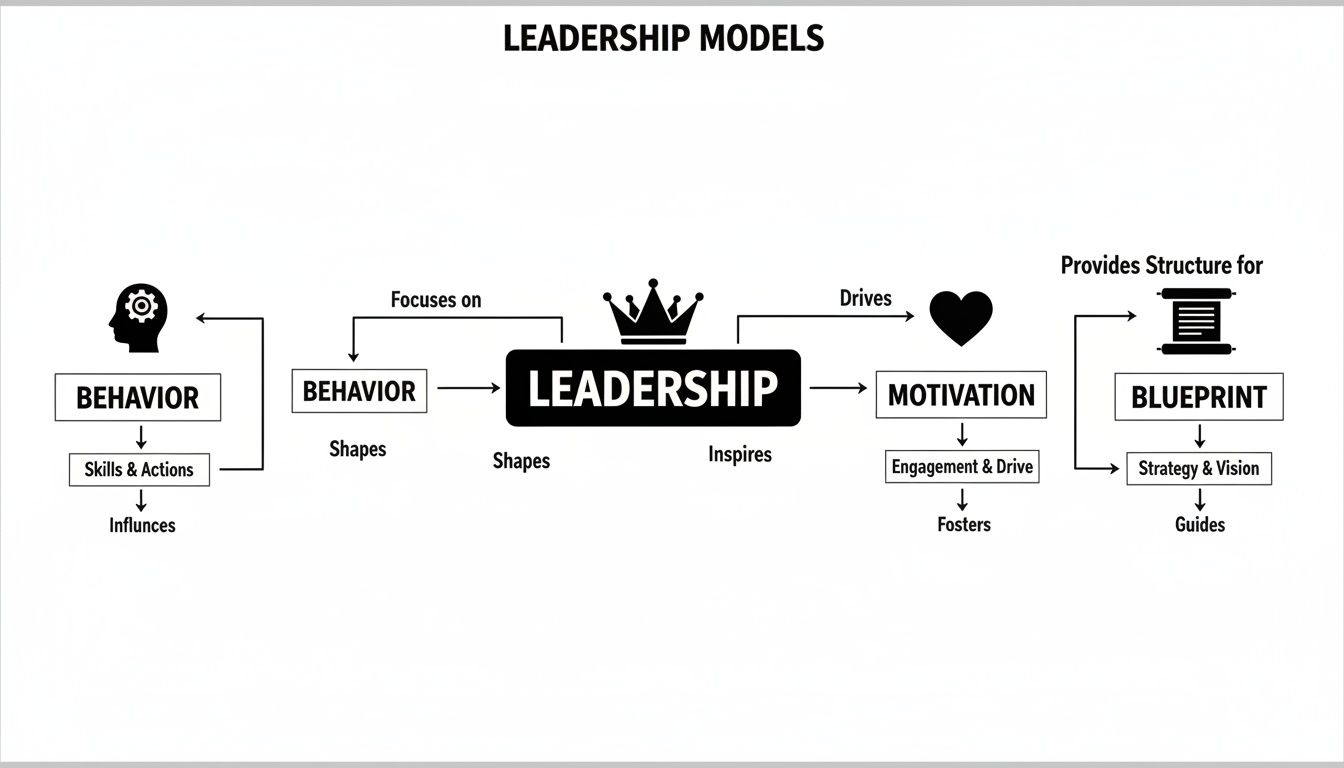
This map shows that while some tests just look at observable behavior, the Enneagram digs into the core drivers behind those actions. It gives you a much richer blueprint for developing your leadership skills.
The Type 1 Leader: The Principled Reformer
The Type 1 leader has an almost compulsive need to improve the world around them. They see what could be and feel a profound responsibility to make it happen. They lead with integrity, precision, and a rock-solid commitment to quality that can inspire entire teams to aim higher.
Their real gift is creating order from chaos and holding everyone (especially themselves) to an incredibly high standard. The catch? That relentless inner critic can lead straight to perfectionism, which might stifle their team's creativity or cause burnout when "good enough" is actually the smarter move.
Leadership Mantra: "Let's do this the right way, every single time." Practical Example: A Type 1 project manager in a Chicago-based tech firm creates a flawless, step-by-step launch plan. While the plan is brilliant, they become overly critical of minor deviations, causing friction with the agile development team that needs to adapt quickly.
The Type 2 Leader: The Supportive Advisor
A Type 2 leader's superpower is their genuine, bone-deep desire to help others win. They're empathetic, encouraging, and absolute masters at building strong, personal relationships. Picture that VP of People who knows every employee's name and story—that’s often a Type 2, building a culture where everyone feels seen and valued.
Their strength is in creating fierce loyalty and truly collaborative teams. The potential pitfall? They can easily neglect their own needs or boundaries while serving others, sometimes giving advice that wasn't asked for or struggling to make tough, unpopular decisions.
Leadership Mantra: "How can I help you succeed?" Practical Example: The head of a non-profit in Austin, a Type 2, spends so much time mentoring individual team members that she falls behind on critical grant-writing deadlines, jeopardizing future funding.
The Type 3 Leader: The Ambitious Achiever
Driven by a need to be valuable and worthwhile, the Type 3 leader is that charismatic, goal-crushing powerhouse. They are incredibly effective at motivating teams, adapting on the fly, and pushing projects across the finish line with stunning efficiency. They set the pace and dare everyone else to keep up.
Their core strength is a relentless drive for success. The challenge is that they can start prioritizing the image of success over the real substance. This might lead them to chase metrics that look great on paper but don’t do much for team morale or the company's long-term health.
Leadership Mantra: "Let's make it happen and get the win." Practical Example: A Type 3 marketing director in New York City focuses the entire team on hitting a vanity metric like "social media impressions" to present at the quarterly meeting, even though website traffic and actual sales conversions are declining.
The Type 4 Leader: The Individualist Visionary
The Type 4 leader brings a unique, authentic, and often brilliant perspective to the table. They are creative, introspective, and totally unafraid to challenge the status quo to build something truly original. They lead with emotional depth and inspire their teams to connect with the why behind the work.
Their strength is their uncanny ability to inject meaning and innovation into everything they do. Their blind spot can be getting lost in their own feelings or feeling misunderstood, which can make them seem withdrawn or resistant to more conventional, pragmatic solutions.
Leadership Mantra: "Let's create something that truly matters." Practical Example: An art director in Los Angeles, a Type 4, rejects a client's commercially viable campaign concept because it doesn't feel "authentic" enough, causing delays and frustrating the account management team.
The Type 5 Leader: The Insightful Investigator
Type 5 leaders are the calm, objective observers who bring a universe of knowledge and expertise to their role. Think of a CTO who can see a technical problem from ten different angles before anyone else has even figured out what's wrong. They lead with logic, foresight, and a deep well of information.
Their greatest strength is their analytical depth and knack for solving complex problems. It's an interesting side note that Type 5s are the rarest Enneagram type, making up only 4.8% of the population. This rarity shows just how valuable—and hard to find—their specialized insight is. Their challenge is moving from analysis to action and connecting with their team emotionally, not just intellectually.
Leadership Mantra: "Let's understand the problem completely before we act." Practical Example: During a server outage, a Type 5 engineering lead in Silicon Valley spends three hours researching the root cause instead of implementing a quick, known fix to get the system back online, causing prolonged downtime for customers.
The Other Leadership Styles
• The Type 6 Leader (The Loyal Guardian): • Dependable and risk-aware, they’re masters at creating stable, secure environments and spotting trouble long before it arrives.
• The Type 7 Leader (The Enthusiastic Visionary): • Optimistic and future-focused, they are brilliant at sparking new ideas and keeping teams energized and inspired.
• The Type 8 Leader (The Protective Challenger): • Decisive and assertive, they go to bat for their people and are never afraid to make the tough calls to drive the mission forward.
• The Type 9 Leader (The Diplomatic Peacemaker): • Inclusive and mediating, they excel at building consensus and making sure every single voice on the team is heard and respected.
Figuring out these different styles is your first big step. If you're still not sure which one clicks for you, check out this fantastic step-by-step guide on how to find your Enneagram type for more clarity.
Once you start recognizing these patterns in yourself and others, a personality test for leadership transforms from an interesting quiz into an indispensable tool for growth.
Putting Your Personality Insights Into Action
So you've taken a personality test for leadership and have the results in hand. Fantastic. But let's be honest—that report is just a stack of interesting data until you actually do something with it. The real magic isn't in knowing your type; it's in using that knowledge to become a more effective, self-aware, and inspiring leader.
Getting your results is like being handed the keys to a ridiculously fast car. Now you have to learn how to drive it. This is where we shift from theory to tangible, on-the-ground action that sharpens your skills, strengthens your team, and builds a powerhouse leadership culture.

From Personal Insight to Leadership Growth
The first and most important place to apply these insights is with yourself. This isn't about some radical personality transplant; it's about learning to manage your natural tendencies with skill and intention. Think of it as developing behavioral flexibility.
Every leadership type comes with a unique set of superpowers and, yes, a few predictable blind spots. The game is to lean into your strengths without letting them morph into liabilities.
• For the Enthusiastic Type 7 Leader: • Your visionary energy is contagious, but you might find deep focus and follow-through a bit of a drag. Your growth path is all about cultivating discipline without snuffing out your creative spark. • Actionable Tip: • Block off two • 90-minute • "deep work" sessions each week dedicated to a single, critical project. No new ideas allowed in the clubhouse during that time.
• For the Principled Type 1 Leader: • Your commitment to excellence is a massive asset, but that inner critic of yours can lead to micromanagement and team burnout. Your journey is about embracing "good enough" and celebrating progress over perfection. • Actionable Tip: • At the end of each week, ask your team to share one thing that went "well enough" and still produced a great result. Then, celebrate it.
This personalized approach is worlds more effective than generic leadership advice. You're working with your wiring, not against it.
Navigating and Improving Team Dynamics
Once you have a handle on your own patterns, you'll start seeing them everywhere. This is when a personality test for leadership becomes a secret weapon for improving team dynamics, turning friction into genuine, productive collaboration. Suddenly, you have a shared language to talk about your differences.
By understanding individual personalities, leaders can strategically apply these insights to build more cohesive and productive groups, exploring various solutions for teams .
Instead of getting frustrated by a colleague’s baffling behavior, you can start to understand the motivation behind it. Shifting from judgment to curiosity is an absolute game-changer for any leadership team.
Practical Example: Bridging the Motivation Gap
Let's say your data-driven CFO, a classic Type 5 Investigator, is clashing with your people-focused COO, a quintessential Type 2 Helper, over a new budget at a Denver-based startup.
• The CFO is all charts and spreadsheets, focusing on the cold, hard logic of the cuts. He’s driven by understanding and conserving resources.
• The COO is laser-focused on how the cuts will crush team morale and thinks the CFO is being a heartless robot. She’s driven by supporting people and meeting their needs.
They aren't just arguing about numbers; they're speaking completely different motivational languages. As the leader, your job is to be the translator. You can bridge the gap by reframing the conversation: "Sarah (COO), I know our team's well-being is your top priority. John (CFO), your analysis ensures we have a stable future for them. How can we use John's data to find a solution that also supports Sarah's goal of maintaining a strong culture?"
This simple move validates both perspectives and aims their very different strengths toward a common goal instead of letting them crash into each other.
Strategic Team Building and Composition
Finally, personality insights are gold for strategic team building. But let's be crystal clear: this is absolutely not about using a test to filter or exclude candidates during hiring. That’s a gross misuse of the tool and a fast track to a boring, uniform team.
Instead, think of it as building a balanced, complementary leadership team where different styles create a powerful synergy. It helps you spot the gaps. If your entire leadership team is made of fast-moving, big-picture Type 8 Challengers, you might have a massive blind spot when it comes to detailed execution or the human impact of your blitzkrieg decisions.
Knowing this, you can consciously look for a leader who brings a different energy—maybe a steady, risk-aware Type 6 Guardian—to round out the group. The goal is to build a leadership "mosaic," where each unique piece makes the whole picture stronger and far more resilient.
Why a Validated Personality Test Matters
Let's be honest. The internet is flooded with free quizzes promising to reveal your spirit animal or which Game of Thrones character you are. It’s easy to lump all personality tests into that same bucket of clickbait fun.
So, how do you know a personality test for leadership is a serious development tool and not just another passing fad? The secret isn’t complicated. It all comes down to two simple but powerful ideas: validity and reliability .
Think of it like a high-end GPS for your career. Reliability means that every time you fire it up, it shows you the same, correct location. A reliable test will give you consistent results time and time again. But that’s only half the battle. Validity means the GPS is actually showing you where you are, not some random spot three towns over. A valid test measures what it claims to measure—your core personality, not just your mood on a Tuesday morning.
Without both, you're just driving blind. A validated tool gives you an accurate map of your internal landscape, which is exactly what you need to make smart, strategic moves in your professional life.
The Science of Credibility
Proper, psychometrically sound tests are the real deal. They’re built on decades of research and mountains of data. The questions aren’t just pulled out of thin air; they’re meticulously crafted to measure deep-seated psychological traits. This scientific backbone is what separates a professional assessment from a flimsy online quiz.
Getting this right is absolutely crucial, especially when you start weaving these tools into your company's talent strategy. This is often where you might bring in professional HR outsourcing services to help manage the process. When the stakes are high—like identifying and growing your next generation of leaders—you can't afford to rely on questionable data. A validated test gives you confidence.
Different Frameworks, Same Destination
Here’s where it gets really interesting. One of the best signs of a test's validity is when different, highly respected systems all point to similar conclusions. It’s like using both Google Maps and Waze and having them both lead you to the same coffee shop. When different frameworks confirm each other, you know they're tapping into something real and measurable.
Research has found some truly striking connections here. In one study of 4,703 people, a whopping 74% who tested as INTP on the Myers-Briggs also identified as an Enneagram Type 5. This is a perfect example of how two completely different models can converge on a core trait—in this case, the deep, analytical thinking style that's vital for certain leadership roles.
A validated test doesn’t just slap a label on you. It gives you a reliable framework for understanding yourself and others, turning abstract psychological ideas into a practical toolkit you can use to tackle real-world leadership challenges.
Choosing a validated personality test for leadership is the first step in building a development plan on solid ground. It means you’re no longer just guessing at your strengths and blind spots. Instead, you're working with a precise, dependable blueprint of who you are as a leader. That confidence is everything, allowing you to move forward with purpose, knowing your efforts are guided by credible, actionable insights.
Common Questions About Leadership Personality Tests
Look, I get it. Whenever you're thinking about investing time and money into a new tool for your team, the questions start popping up. You want to make sure a personality test for leadership is actually going to deliver real value, not just be another corporate fad.
Let's cut through the noise and tackle the big questions leaders always ask before diving in.
Can a Personality Test Really Predict Leadership Success?
This is the million-dollar question, and the short answer is a hard "no." But that's a good thing. A personality test isn't a crystal ball, and you shouldn't want it to be. Its real value is much more practical.
Think of a well-validated test as a diagnostic scan for a high-performance engine. The scan doesn't predict if the car will win the race. Instead, it gives you a precise readout of its natural strengths, where it gets its power, and which parts might overheat when you push it too hard.
For example, a test might peg a leader as an Enneagram Type 8 (The Challenger). This instantly highlights their incredible, natural-born decisiveness and ability to take command. But it also shines a bright light on their biggest growth area: learning to slow down, embrace vulnerability, and bring others along.
The test gives you a personalized roadmap for growth. It’s not about predicting your fate; it’s about understanding your potential. It shows you exactly where to lean into your natural talents and what blind spots to watch out for on your leadership journey.
Should We Use These Tests for Hiring Leaders?
This one's tricky, and you have to be smart about it. The answer is yes, but strategically and ethically . A personality test should never, ever be a simple pass/fail gatekeeper for a candidate. That’s not just bad practice—it’s a surefire way to build a team with zero diversity of thought.
Instead, think of it as a tool to spark a much deeper, more insightful conversation during the hiring process. It adds a layer of context that you just can't get from a polished resume or a standard interview.
Here’s a real-world example: Let’s say your current leadership team is full of visionary, fast-moving Type 7s. They’re amazing at getting new projects off the ground, but follow-through can be… a challenge. A personality test for leadership reveals a new candidate is a steady, detail-focused Type 6.
Suddenly, you see the immense value that person could bring to balance the team's frenetic energy. It’s not about finding the "right" type; it's about building a complementary, high-functioning leadership crew. The results are there to help you explore how someone works and fits, never to make the final decision on its own.
What if My Team Uses Results to Stereotype Each Other?
This is a totally valid fear, and it happens. The second you hear someone say, "Oh, of course you'd say that, you're a Type 1," it's time to step in. This is a critical moment where you, as a leader, must reinforce the tool's true purpose.
Your job is to immediately pivot the conversation from lazy labeling to active leveraging. The whole point is to build empathy and improve how you work together, not to shove people into neat little boxes.
Here’s how to reframe it on the spot:
When you do this, you transform those static, unhelpful labels back into what they were always meant to be: a dynamic tool for mutual understanding and building a ridiculously strong, collaborative team.
Ready to stop wondering and start understanding your own leadership style? At Enneagram Universe , we've built a free, scientifically validated assessment that gives you deep insights into what truly drives you. Discover your type and unlock a clear path to becoming a more effective, self-aware leader. Take the free Enneagram test today!