Conflict Resolution Activities for Students: 8 Proven Classroom Ideas for 2026
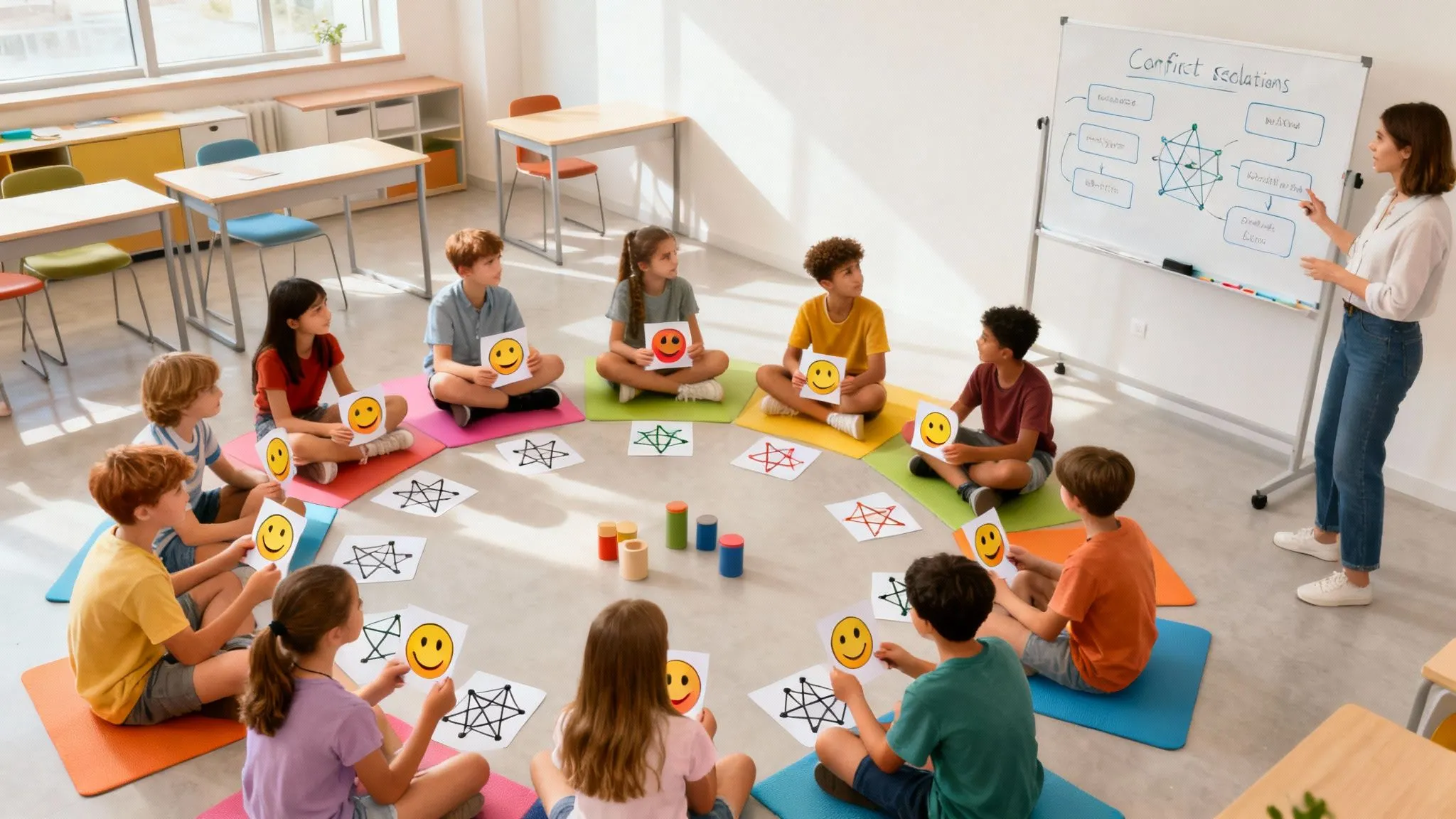
Ever feel like your classroom turns into a courtroom after recess? One minute you're explaining long division, the next you're mediating a high-stakes dispute over a broken crayon. You’re not just a teacher; you’re a negotiator, a mediator, and often, a reluctant peacekeeper. But what if you could equip your students with the tools to navigate their own disagreements, turning friction into a powerful lesson in empathy and communication?
That’s where this guide comes in. Forget the generic advice that ends with a half-hearted "just say sorry." We're diving deep into a comprehensive roundup of eight actionable conflict resolution activities for students that actually work. These aren't just quick fixes; they are foundational skills for building a more peaceful, collaborative, and emotionally intelligent classroom. To create a foundation for effective conflict transformation, exploring essential resources for Social Emotional Learning can be highly beneficial.
This listicle moves beyond theory and gets straight to practical application. We’ll break down each activity with everything you need:
• Step-by-step instructions
• Age and grade suitability
• Specific learning objectives
• Unique, Enneagram-informed adaptations for deeper self-awareness
Get ready to transform your approach to classroom conflict from a daily disruption into a dynamic, teachable moment. You'll empower your students with skills that will serve them long after they've left your classroom. Let’s begin.
1. Enneagram-Based Perspective Taking
Ever wonder why some students dive into conflict head-on while others would rather do anything else, like reorganize the classroom library alphabetically by author's middle name? The Enneagram offers a fascinating lens to understand these wildly different approaches. This isn't just another personality quiz; it's a powerful tool for building empathy by revealing the why behind student actions, making it one of the most transformative conflict resolution activities for students .
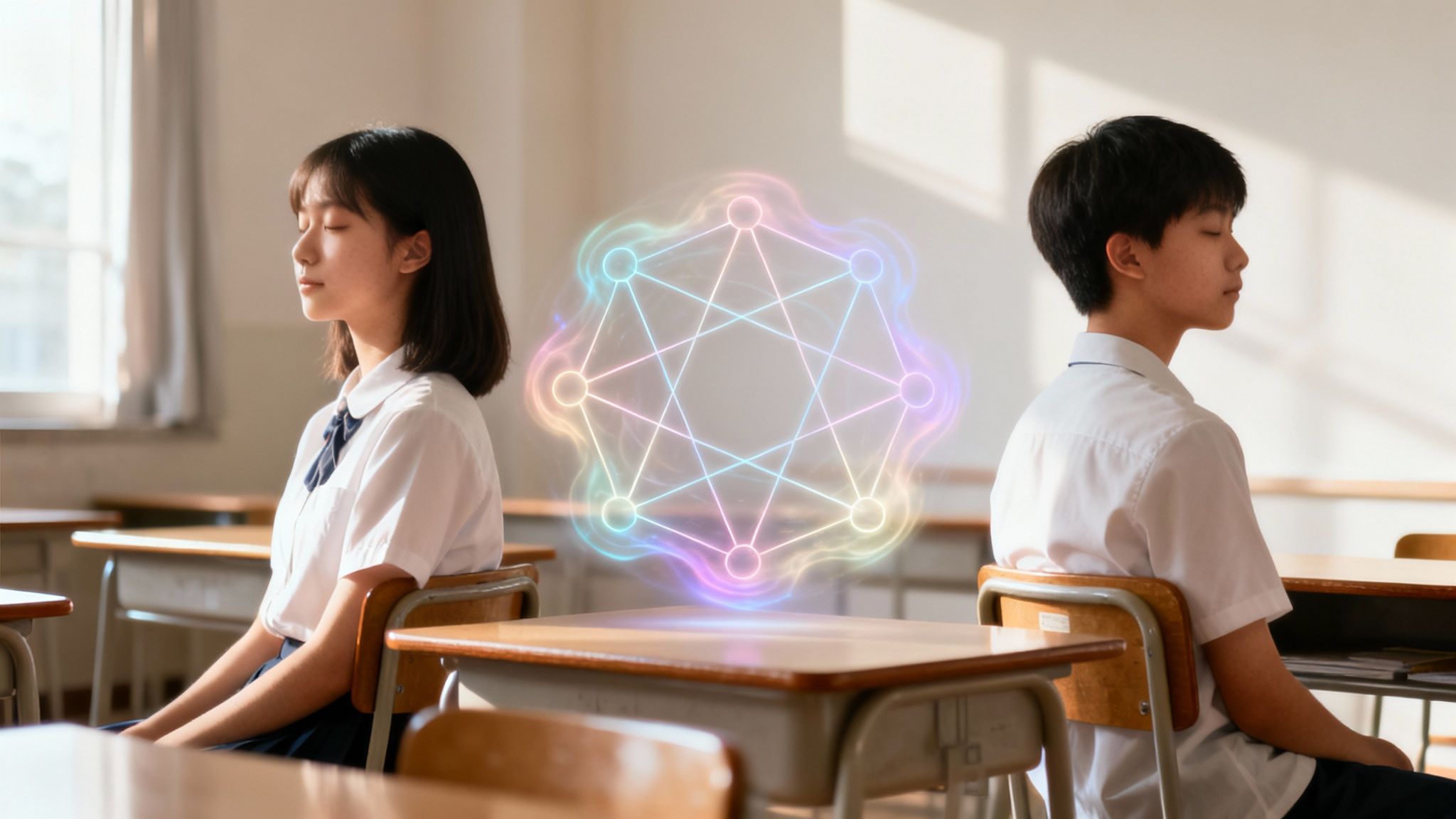
This activity helps students see that disagreements often erupt from clashing core motivations, not from personal attacks. It shifts the narrative from "they are being difficult" to "their needs are different from mine."
Implementation Guide
• Age/Grade: • High School (Grades 9-12)
• Learning Objectives (SEL): • Social Awareness (empathy, perspective-taking), Relationship Skills (communication, conflict management), Self-Awareness (identifying personal values and biases).
• Materials: • Enneagram assessments (like the RHETI), conflict scenario cards, journals, and Enneagram motivation charts.
• Time Allotment: • 60-75 minutes (after students have taken an assessment)
• Instructions:
Practical Examples in Action
Imagine a Type 1 student, "The Reformer," getting frustrated with a Type 9 partner, "The Peacemaker," for not giving direct feedback on a project. The Type 1 sees this as laziness. Through this activity, the Type 1 learns that the Type 9 isn't being lazy; they're avoiding confrontation to maintain inner peace. Suddenly, a character flaw becomes a differing core motivation. For a deeper dive, you can explore detailed breakdowns of each type's core motivations on Enneagram Universe. Learn more about the Enneagram's core motivations to enrich this activity.
2. Nonviolent Communication (NVC) Circles
Ever feel like student conflicts sound like a courtroom drama where everyone is the prosecutor, and no one is the jury? Nonviolent Communication (NVC) Circles flip the script, turning accusatory shouting matches into structured, empathetic dialogues. This method, developed by Marshall B. Rosenberg, is less about winning an argument and more about understanding the unmet needs driving the conflict, making it a cornerstone among effective conflict resolution activities for students .
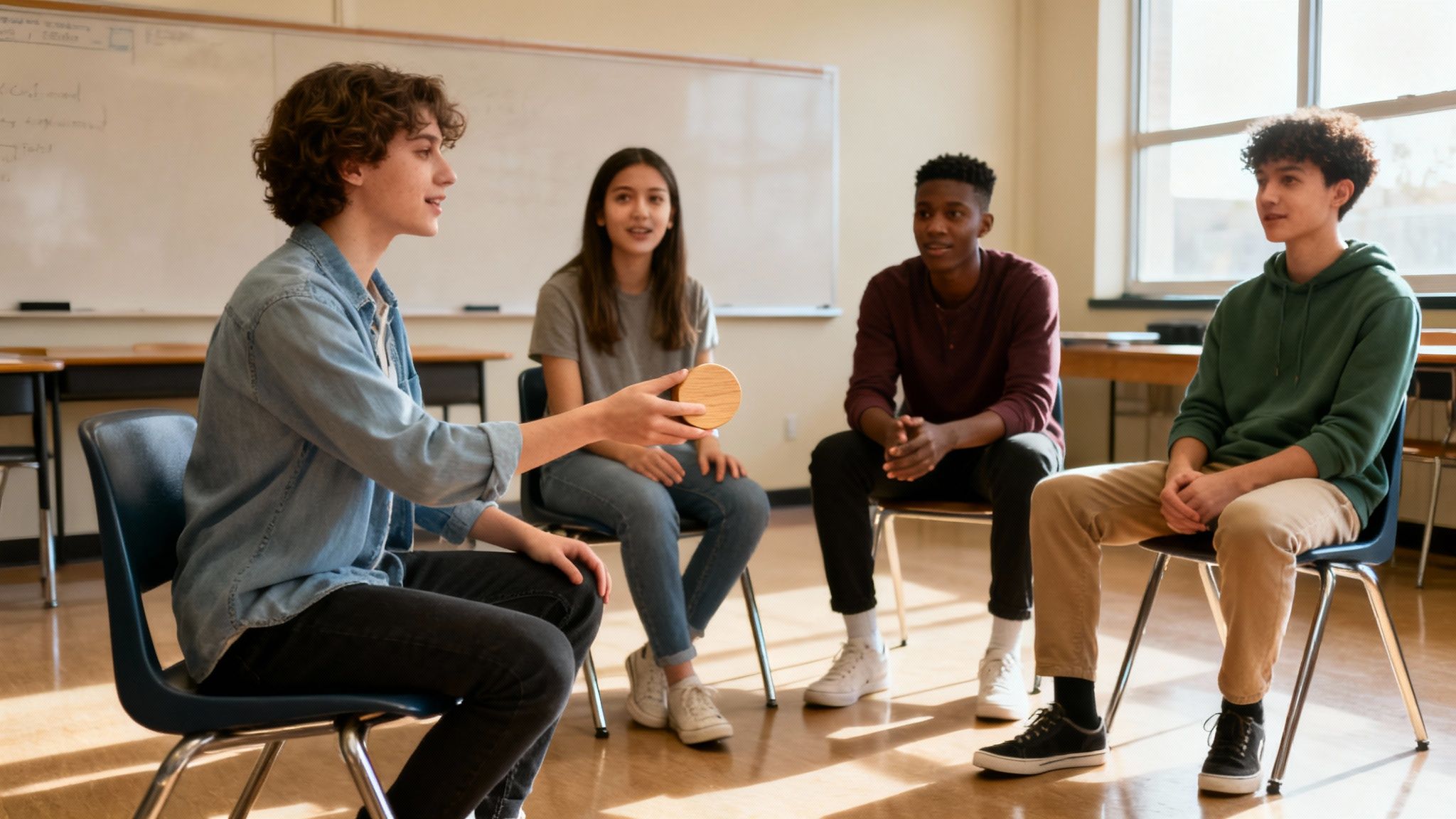
This activity guides students to express themselves without blame by using a simple four-step formula: Observation, Feeling, Need, and Request. It creates a safe space where students can be vulnerable and heard, transforming a battleground into common ground.
Implementation Guide
• Age/Grade: • Middle & High School (Grades 6-12)
• Learning Objectives (SEL): • Relationship Skills (communication, social engagement), Self-Management (impulse control, stress management), Responsible Decision-Making (analyzing situations, problem-solving).
• Materials: • A "talking piece" (e.g., a small ball, stone, or figurine), NVC formula poster, feeling and needs word lists, conflict scenario cards.
• Time Allotment: • 45-60 minutes
• Instructions:
Practical Examples in Action
Imagine a student is upset because their lab partner, Sam, was on their phone during an experiment. Instead of saying, "Sam, you're so lazy and never help!" they use NVC. Holding the talking piece, they say, "When I saw you on your phone during our experiment (Observation), I felt frustrated and unsupported (Feeling) because I need reliability and teamwork (Need). Would you be willing to put your phone away during our next lab session? (Request)." This clear, non-blaming statement invites collaboration rather than defensiveness. For more resources on the NVC framework, the Center for Nonviolent Communication offers extensive training and materials. Learn more about the NVC model to enhance this powerful activity.
3. Mediation Training & Peer Mediators Program
What if students could solve their own conflicts without a teacher or principal swooping in? A Peer Mediators Program makes this a reality by training students to become neutral facilitators. It’s like creating a team of junior diplomats who can turn hallway arguments into handshakes, making it one of the most empowering conflict resolution activities for students .
This structured program equips student mediators with skills like active listening and questioning to guide their peers toward mutually acceptable solutions. The goal isn't to assign blame but to find a path forward, teaching responsibility and communication in one fell swoop.
Implementation Guide
• Age/Grade: • Middle & High School (Grades 6-12)
• Learning Objectives (SEL): • Relationship Skills (communication, conflict management, teamwork), Responsible Decision-Making (problem-solving, ethical responsibility), Social Awareness (empathy, appreciating diversity).
• Materials: • Mediation training manual/curriculum, role-playing scenario cards, official mediator certificates, a designated neutral space for mediations, and referral forms.
• Time Allotment: • Initial training is extensive (e.g., 12-15 hours), with ongoing 30-minute monthly check-ins. Individual mediations typically last 20-45 minutes.
• Instructions:
Practical Examples in Action
Imagine two 7th-grade students are in a dispute over a rumor spread on social media. Instead of detention, they are referred to the peer mediation program. The student mediators, a 9th-grade student and a 10th-grade student, guide them through the process. The mediators don’t take sides; they help the students express how the rumor made them feel and what they need to move forward. The outcome is a signed agreement outlining how they will interact respectfully online and in person. This approach turns a digital drama into a powerful lesson on empathy and accountability. To further understand the dynamics at play, you can explore detailed strategies on Enneagram Universe. Get insights on how to resolve relationship conflict s to better support your peer mediators.
4. Restorative Justice Circles & Harm-Centered Dialogue
Forget the classic trip to the principal's office. Restorative Justice Circles flip the script on discipline, moving away from punishment and toward healing. Instead of asking "What rule was broken?" this powerful approach asks, "Who was harmed, and what can be done to make things right?" It creates a structured, safe space for those involved in a conflict to come together, share their stories, and collaboratively decide how to repair the damage.
This method transforms conflict from a win-lose battle into a community-building opportunity. It’s one of the most profound conflict resolution activities for students because it teaches accountability, empathy, and the real-world skills needed to mend relationships.
Implementation Guide
• Age/Grade: • Middle School & High School (Grades 6-12)
• Learning Objectives (SEL): • Relationship Skills (conflict management, social engagement), Social Awareness (empathy, perspective-taking), Responsible Decision-Making (ethical responsibility).
• Materials: • A talking piece (an object that grants the holder the right to speak), comfortable seating arranged in a circle, agreed-upon values or ground rules written on a whiteboard, a trained facilitator.
• Time Allotment: • 45-90 minutes (highly variable depending on the conflict)
• Instructions:
Practical Examples in Action
Imagine a student's phone was stolen by a classmate. A punitive approach would be suspension. A restorative circle brings both students, a parent for each, and a trusted teacher together. The student who was harmed explains the fear and violation they felt, and how they now struggle to trust peers. The student who stole the phone, hearing this direct impact, explains the pressure they felt to fit in. The group doesn't excuse the behavior but seeks to understand it. The resolution might involve the phone's return, a public apology to the class to restore trust, and a commitment from the student to join a school club to build healthier friendships. This is accountability that heals, rather than just punishes.
5. Role-Play & Perspective Reversal Exercises
There's a world of difference between saying you understand someone's point of view and actually feeling it. Role-playing is the bridge between those two worlds. By literally stepping into another person's shoes, students can experience a conflict from the other side, transforming abstract empathy into a tangible, memorable lesson. This makes it one of the most dynamic and effective conflict resolution activities for students .
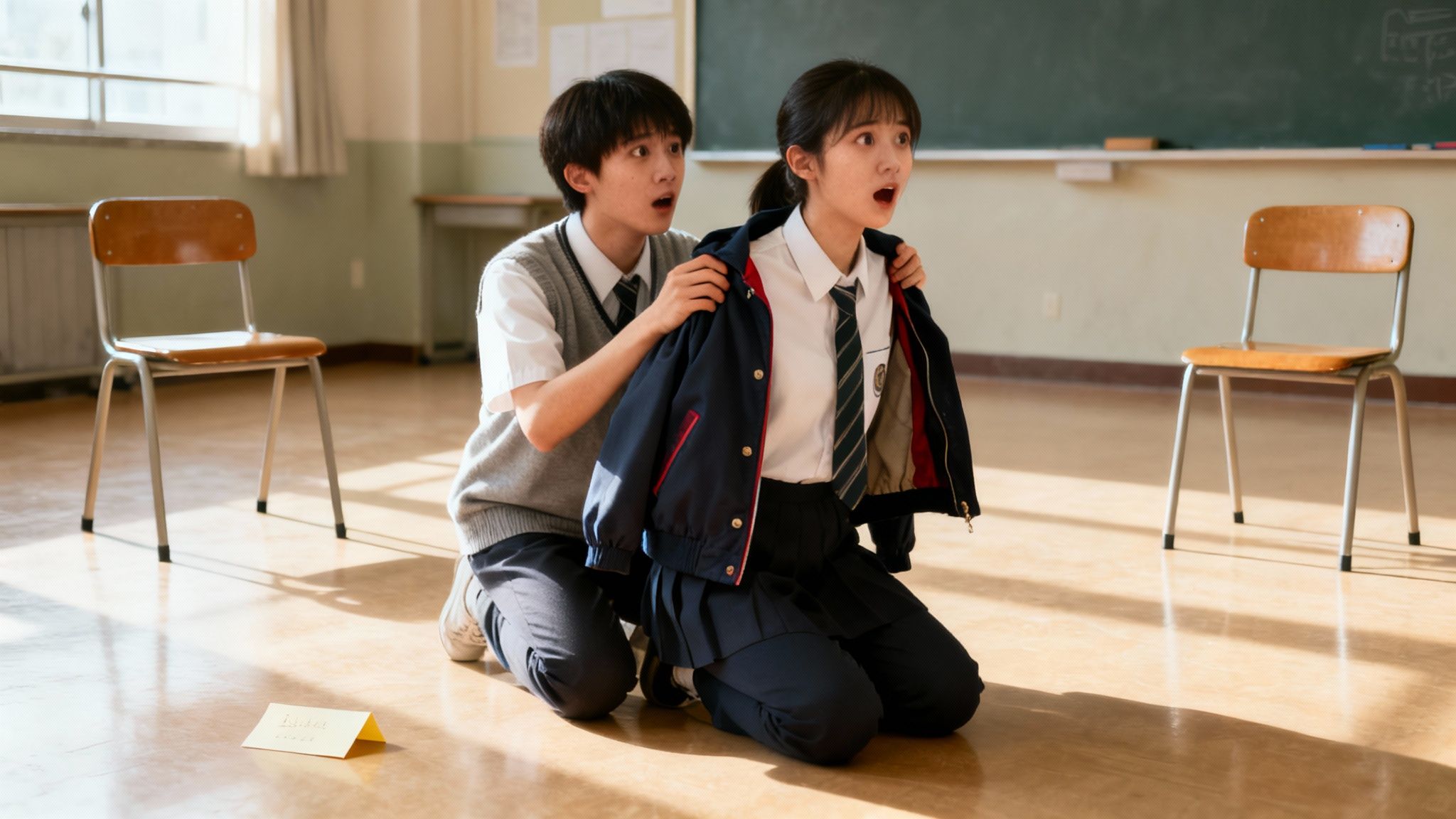
This method, popularized by drama educators like Augusto Boal, moves beyond simple discussion. It forces students to embody different motivations and emotional responses, often revealing surprising solutions and fostering a deeper, more genuine understanding of their peers.
Implementation Guide
• Age/Grade: • Middle School & High School (Grades 6-12)
• Learning Objectives (SEL): • Social Awareness (empathy, perspective-taking), Relationship Skills (communication, conflict resolution), Responsible Decision-Making (analyzing situations, problem-solving).
• Materials: • Conflict scenario cards (e.g., "Two friends are arguing over a rumor," "A student feels a teacher graded them unfairly"), optional props or costumes.
• Time Allotment: • 45-60 minutes
• Instructions:
Practical Examples in Action
Consider a scenario where one student, Alex, is frustrated with a group member, Sam, for not contributing. In the first role-play, Alex is angry and accusatory. After the perspective reversal, Alex (now playing Sam) experiences the anxiety of not understanding the material and feeling too embarrassed to ask for help. The conflict shifts from being about "laziness" to being about a need for support. This experiential insight is far more powerful than a lecture on teamwork could ever be. Always offer an opt-out for students uncomfortable performing and start with low-risk scenarios before tackling more sensitive issues.
6. Collaborative Problem-Solving (CPS) Protocol
What if student misbehavior wasn't a matter of willful defiance, but a simple skills deficit? That's the revolutionary idea behind the Collaborative Problem-Solving (CPS) Protocol, developed by Dr. Ross Greene. This isn't about consequences or rewards; it's a structured conversation that transforms conflicts from power struggles into partnership opportunities. It's a game-changer for educators, making it one of the most effective conflict resolution activities for students .
This protocol helps students and adults collaboratively solve the problems that lead to challenging behaviors. It shifts the focus from "what's the consequence?" to "what's the problem, and how can we solve it together?" This builds crucial problem-solving and self-advocacy skills, rather than just compliance.
Implementation Guide
• Age/Grade: • Elementary through High School (Grades K-12), adaptable for all ages.
• Learning Objectives (SEL): • Relationship Skills (communication, conflict management), Self-Management (impulse control, stress management), Responsible Decision-Making (problem-solving).
• Materials: • CPS "Plan B" worksheet (optional), a quiet space, a commitment to genuine listening.
• Time Allotment: • 15-30 minutes per conversation.
• Instructions:
Practical Examples in Action
Imagine a student repeatedly interrupts class. Instead of a detention slip, the teacher uses CPS. In the Empathy Step, the teacher learns that the student feels lost and interrupts to ask questions before they forget them. The teacher's concern is that the interruptions disrupt the learning of others. Together, they brainstorm a solution: the student will write questions on a sticky note and place it on the corner of their desk, a signal the teacher will address at the next natural pause. The problem is solved, and the student learns a new skill for advocating for their needs appropriately. For official resources and training, visit the Lives in the Balance website, founded by Dr. Greene.
7. Emotional Literacy & Mindfulness Practices
Ever notice how a tiny disagreement can escalate into a full-blown classroom drama faster than a dropped beaker of glitter? That's often because big emotions take over, leaving little room for rational thought. Emotional literacy and mindfulness practices teach students to hit the pause button, transforming them from emotional reactors into mindful responders, making this a cornerstone of effective conflict resolution activities for students .
This dual approach equips students with a robust vocabulary to name their feelings and the self-regulation skills to manage them. Instead of a conflict being driven by a storm of unnamed feelings, it becomes an opportunity to understand what's happening internally and communicate needs clearly.
Implementation Guide
• Age/Grade: • Adaptable for All Levels (K-12)
• Learning Objectives (SEL): • Self-Awareness (identifying emotions), Self-Management (impulse control, stress management), Social Awareness (empathy).
• Materials: • Emotion wheels (with varied vocabulary), journals, body outline worksheets, mindfulness scripts or apps (like Calm or Headspace for Schools), calming corner props.
• Time Allotment: • 10-15 minutes daily or 30-45 minutes for a dedicated weekly lesson.
• Instructions:
Practical Examples in Action
In an elementary classroom, a student who might typically lash out when a peer takes their crayon learns to say, "I feel angry because I was using that, and I need you to ask first." In high school, a student feeling overwhelmed before a presentation can use a "box breathing" technique to calm their nervous system instead of snapping at a classmate. Complementing mindfulness, engaging in specific emotional intelligence activities for kids can further equip students with the tools to understand and manage their feelings, fostering empathy essential for resolving conflicts. This isn't just about feeling calm; it's about building the awareness to choose a response rather than being hijacked by an emotion. To explore this connection further, you can learn how to increase your EQ and bring those insights into the classroom.
8. Cooperative Learning Structures & Interdependence Building
Ever noticed how a classroom can sometimes feel like a bunch of solo performers who just happen to be in the same room? Cooperative learning flips that script, transforming the environment from a competitive arena into a collaborative workshop. By designing tasks where students are positively interdependent, they learn that sinking or swimming is a team sport. This isn't just about group projects; it's a fundamental shift that makes cooperation essential for success, positioning it as one of the most proactive conflict resolution activities for students .
This approach, popularized by figures like Spencer Kagan and Elliot Aronson, teaches students that they need each other. Conflict decreases because classmates are no longer obstacles to individual success but are instead vital partners in achieving a shared goal. The focus shifts from "me versus them" to "how can we do this together?"
Implementation Guide
• Age/Grade: • Elementary to High School (Grades 3-12), adaptable
• Learning Objectives (SEL): • Relationship Skills (collaboration, communication, conflict management), Social Awareness (perspective-taking), Responsible Decision-Making (working effectively in groups).
• Materials: • Task instructions, assigned role cards (e.g., Facilitator, Recorder, Reporter), Jigsaw materials (texts divided into sections), group reflection worksheets.
• Time Allotment: • Varies based on activity (20-60 minutes)
• Instructions:
Practical Examples in Action
Imagine a history class using the "Jigsaw" method to learn about the American Revolution. Each student in a "home group" is assigned a specific topic, like the Stamp Act or the Boston Tea Party. They then meet with students from other groups in an "expert group" to master their topic. Finally, they return to their home group to teach their peers. A student cannot succeed without the knowledge shared by their teammates. This structure organically builds communication and trust, reducing the friction that leads to conflict. The focus is on shared mastery, not individual competition.
8-Activity Student Conflict Resolution Comparison
| Approach | 🔄 Implementation Complexity | ⚡ Resource Requirements | ⭐ Expected Outcomes | 📊 Ideal Use Cases | 💡 Key Advantages |
|---|---|---|---|---|---|
| Enneagram-Based Perspective Taking | Moderate — requires assessments and Type education | Enneagram tests, teacher training, charts/handouts | Deeper self-awareness; improved empathy; less blaming | Peer conflicts, recurring interpersonal tensions, SEL lessons | Contextualizes motives; reduces defensiveness; strengthens long-term EQ |
| Nonviolent Communication (NVC) Circles | High — needs sustained coaching and practice | Skilled facilitator, time for circles, talking piece, visible prompts | Clearer expression; reduced reactivity; needs-focused solutions | Group dialogues, bullying incidents, restorative practices | Teaches transferable language; ensures equal voice; fosters mutual respect |
| Mediation Training & Peer Mediators Program | High — program setup, ongoing training & oversight | Training curriculum, coordinator, mediator schedules, space | Faster peer-led resolutions; leadership skills; reduced admin load | Frequent minor disputes, playground conflicts, school-wide infractions | Empowers students; scalable; builds peer leadership and capacity |
| Restorative Justice Circles & Harm-Centered Dialogue | Very high — requires trauma-informed, expert facilitation | Highly trained facilitators, long sessions, prep & follow-up resources | Genuine accountability; relationship repair; lower recidivism | Serious harm incidents, community healing, systemic behavior issues | Deep relational repair; community ownership of solutions; equity-focused outcomes |
| Role-Play & Perspective Reversal Exercises | Low–Moderate — planning and safe norms needed | Minimal props, facilitator guidance, rehearsal time | Embodied empathy; reveals assumptions; creative problem-solving | Classroom practice, rehearsing difficult conversations, SEL workshops | Engaging and memorable; builds perspective-taking through experience |
| Collaborative Problem-Solving (CPS) Protocol | High — adults need mindset shift and fidelity | Adult training, time per case, documentation and follow-up | Fewer power struggles; improved skills; durable behavior change | Chronic disruptions, authority conflicts, students with regulation needs | Student-centered; treats problems as skill deficits; increases buy-in |
| Emotional Literacy & Mindfulness Practices | Moderate — requires consistent, ongoing practice | Curricula/tools, brief daily time, teacher modeling, safe space | Better self-regulation; reduced escalation; improved attention | Universal SEL foundation, anxiety reduction, conflict de-escalation | Foundational across approaches; neuroscience-backed; low-risk skill-building |
| Cooperative Learning Structures & Interdependence Building | Moderate — requires intentional design and monitoring | Lesson planning time, role sheets, accountability rubrics | Stronger collaboration; reduced in-group/out-group; academic gains | Project-based learning, reducing prejudice, building classroom community | Builds belonging; repeated practice with conflict skills; leverages diverse strengths |
Your Next Move: Building a Conflict-Competent Classroom
And there you have it, a veritable Swiss Army knife of conflict resolution activities for students designed to transform your classroom from a potential battleground into a vibrant hub of understanding and collaboration. We’ve journeyed through the structured empathy of Nonviolent Communication Circles, witnessed the power of peer-led justice in Mediation Training, and explored the deep, healing potential of Restorative Justice practices. We’ve stepped into others’ shoes with Role-Play exercises and tackled problems together using Collaborative Problem-Solving protocols.
The common thread woven through these diverse activities is a monumental shift in perspective. Instead of viewing conflict as a disruptive problem to be squashed, we begin to see it for what it truly is: a critical opportunity for growth, connection, and learning . Each disagreement over a shared toy, every misunderstanding on the playground, becomes a live-action lesson in empathy, communication, and self-awareness. You're not just managing behavior; you're equipping students with the foundational skills for successful relationships, future careers, and a more compassionate global citizenship.
From Activities to Culture
The secret to lasting success isn't just doing these activities; it's about building a culture where their principles are lived out daily. A one-off Restorative Circle is powerful, but a classroom where students regularly use "I feel" statements from NVC and are mindful of their emotional state is transformative.
Think of it like building a house. You can’t just throw up the walls and expect it to stand.
• The Foundation: • Start with the basics of • Emotional Literacy & Mindfulness • . These practices are the concrete foundation, giving students the self-awareness needed to engage in any other activity constructively.
• The Framework: • Weave in • Cooperative Learning Structures • . These are the beams and supports that make collaboration the default, not the exception. They build the muscle of interdependence.
• The Specialized Tools: • Once the structure is sound, bring in the more intensive tools like • Peer Mediation, NVC, and Restorative Circles • . These are your specialized power tools for addressing more significant issues and repairing harm.
This layered approach ensures that when a major conflict arises, students already have the language, self-regulation, and relational trust to navigate it effectively.
The Self-Awareness Superpower
Underpinning all of this is the profound insight offered by frameworks like the Enneagram. Understanding that a Type Eight student isn't being "defiant" but is trying to protect their autonomy, or that a Type Two isn't being "nosy" but is driven by a deep need to be helpful, changes everything. It moves us from judgment to curiosity.
When you, the facilitator, understand these core motivations, you can tailor your approach. When students understand them in themselves and their peers, they develop a powerful "why" behind others' actions. This insight is the catalyst that makes every single one of the conflict resolution activities for students we've discussed exponentially more impactful. It's the difference between following a script and having a truly heartfelt, productive conversation. By fostering this self-awareness, you give your students a gift that will serve them long after they've forgotten the specific steps of any single activity: the ability to see the humanity in everyone, especially when it’s hard. Your next move isn't just to pick an activity; it's to start building that deeper foundation of understanding.
Ready to unlock that deeper layer of self-awareness in your classroom? The Enneagram provides an unparalleled framework for understanding the core motivations that drive conflict. Start your journey with Enneagram Universe , which offers clear, accessible tools and assessments perfect for introducing these powerful concepts to your students. Discover their unique types and transform your approach to conflict resolution today at Enneagram Universe .